

Shaping Future-Ready Learners: Caroline Pendleton-Nash On Queen Elizabeth’s School, Gurugram

Share
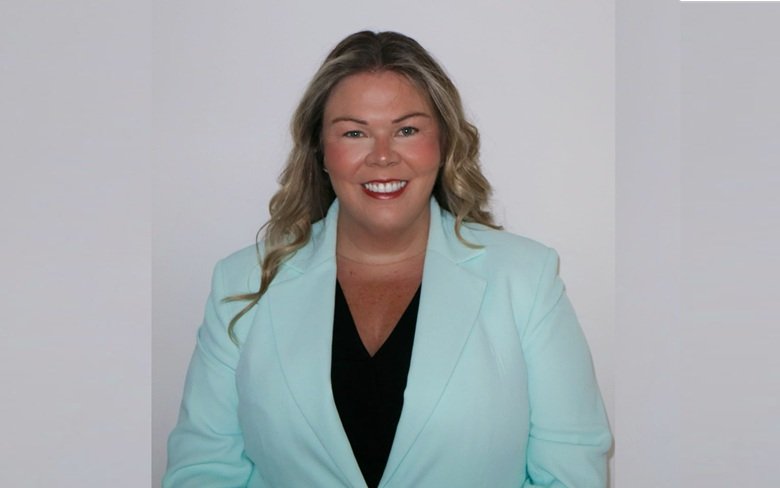
Queen Elizabeth’s School in Gurugram is set to open in August 2026, and Caroline Pendleton-Nash, Chief Executive Officer of K-12 Global Schools at GEDU Global Education, is at the helm of this ambitious project. Caroline leads the K-12 Global Schools division across Europe, Asia, the Middle East, and other international markets. With over two decades of experience shaping high-quality, future-ready schools, she has worked extensively with governments and private partners to establish, scale, and transform schools around the world, including seven in the UAE.
Speaking about the new Gurugram school, Caroline says, “We are opening in August 2026, later this year. Parents can make enquiries now, and full applications will be accepted from mid-February. Our website is live, qegurugram.com, and we are active on Instagram and LinkedIn.”
She explains that the experience centre is designed to provide a full picture. “Parents can see mock classrooms with the furniture and colour schemes we’ll use. There are counselling rooms, meeting rooms for parents, outdoor areas, and workstations. The immersive learning suite shows how technology will enhance learning. Our aim is that parents leave understanding the school’s mission, values, and vision, and what their child will experience. It’s about preparing students for the world—whether university, careers, or family business.”
Queen Elizabeth’s School will follow the Cambridge curriculum from the UK. Caroline elaborates, “We work closely with the founding school in Barnet. They are on our governing body and conduct annual inspections to ensure we deliver what we promise. We are also in pre-accreditation with COBIS, the Council of British International Schools. Parents can feel secure that their child’s education meets international standards.”
The school will start with EY1 for three-year-olds and go up to Year 9 in the first year, adding a grade each year. Caroline explains, “By age 16, students will sit IGCSEs, and by 18, they will take A-levels. They leave with international qualifications.”
Regarding student numbers and boarding, Caroline says, “We’re expecting around 250 students in Year 1. Eventually, the school will grow to 2,000 students, with about 50 percent being boarders. We’ll have two hostels, one for girls and one for boys. The 17-acre campus is next to botanical gardens, so the air quality is really good. I mean, I travelled from there to Noida, and just in two hours, the air quality changes significantly.”
The campus combines retrofitted and new buildings. Caroline describes, “Some buildings were a former college. We’re upgrading them, and over two years, we’ll add an auditorium, learning resource centre, two hostels, and a sports village with really top-class facilities. Sustainability is a major focus—we’re aiming for LEED Platinum. Even small things, like switching from Dell to Apple computers, were based on sustainability studies. Every decision, big or small, considers impact.”
Caroline says the school aligns with India’s NEP 2020. “NEP emphasizes foundational literacy, numeracy, vocational education, and preparing kids for the future. The Cambridge curriculum already supports these areas, and our QE Futures Programme adds hands-on exposure to careers. Even our three-year-olds meet professionals, like vets, to see what different jobs are like. Older students get guidance for university applications and portfolios, so they start building skills early. There’s a strong synergy between what NEP wants and what we’re doing.”
The school maintains a deep connection with the UK founding school. Caroline emphasizes, “This is not a franchise. It’s authentic. I’ve been to the UK school five times this year alone. The headmaster and chair are on our governing body here. Staff interact constantly, sharing programmes and adapting them. For example, the UK school doesn’t have girls; we do. Students in India, Dubai, and the UK participate in shared trips and lectures. Everything is purposeful, not just a name on a building.”
On staffing, she explains, “Around 75 percent of teachers will be from India, with the rest being experienced British curriculum teachers. Each class has a teacher and an assistant, so early years maintain a 1 to 16 ratio. Students get attention and support.”
Caroline talks about technology use. “We see tech as an enhancer, not a replacement. Young children need to learn handwriting and motor skills. Technology helps students with special needs access lessons—they might use voice-to-text, for example. Every student gets iPads or MacBooks as part of the fee, so there is equality. In our immersive learning suite, students can walk around pyramids in Egypt, touch walls and floors—it’s interactive and memorable. The goal is to enhance learning, not divide students.”
Scholarships at the school go beyond academics. Caroline explains, “We have academic scholarships, yes, but also for care, compete, challenge, and create. That includes sports, music, arts, and community service. QE education is about the whole person, not just grades.”
Regarding fees, she says, “Founding families get 25 percent off for the whole time their child is at the school, and sibling discounts are available. Boarding fees are not announced yet, but the discount is long-term, not just the first year or two. We want our founding families to build the school with us and be part of the community.”
School hours run till 4 pm or 5 pm Caroline notes, “Our facilities are so extensive—sports, music, arts, auditorium, practice rooms—that students don’t need to go elsewhere.”
On inclusivity, she says, “We are fully inclusive. We have special needs and English as an additional language department. Students with autism or other challenges fully access the curriculum. Diversity is important—it reflects the real world. Our UK school has students with autism too, and they succeed. It’s the same ethos here.”
Caroline explains why Gurugram was chosen: “We looked all over India. Gurgaon is future-focused, lots of tech companies, multinational presence. Land was available near botanical gardens, so good air quality, and it’s close enough to Delhi for commuting parents. It made sense for our vision and growth.”
Finally, on student demographics, she says, “We welcome both Indian and foreign students. Mostly Indian, but foreign families working here can join. We believe in offering a high-quality, globally aligned education to all students in the region.”
With Caroline Pendleton-Nash leading the initiative, Queen Elizabeth’s School in Gurugram aims to combine tradition and innovation, preparing students not just academically but for life in a global, complex world.