


One Sanskrit Teacher, Too Many Classrooms

Share
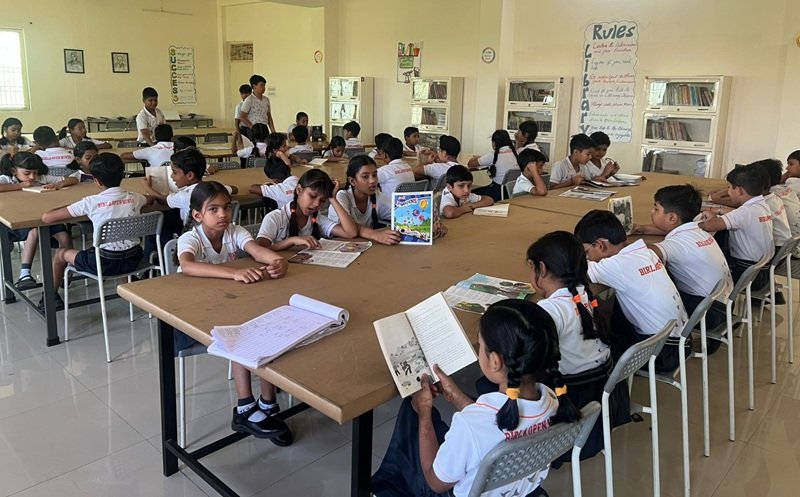
The National Education Policy 2020 pushed schools to embrace multilingual learning through its three-language policy, a move meant to keep Indian languages alive and give students more to choose from. But on the ground, a lot of schools are running into the same basic problem: there just aren’t enough Sanskrit teachers to go around.
In many schools, one Sanskrit teacher ends up handling every class and section by themselves. That’s a heavy load for any one person, and it shows up in how much attention students actually get, especially the ones learning the language for the first time.
To understand what this actually looks like day to day, I spoke with Mrs. Asha Anand, who’s been teaching Sanskrit for over 30 years. She didn’t sugarcoat it. “One teacher cannot do justice to every class,” she said. “Schools should have at least two Sanskrit teachers. When one teacher has to teach every section, there is very little time to explain topics in detail or give individual attention to students.”
She pointed out something worth remembering, for most kids, Sanskrit isn’t like Hindi or English. It’s a language they’re often meeting for the first time only once they hit middle school. That means they need more time just to get comfortable with the grammar and the pronunciation, things students learning Hindi or English have usually already absorbed by then.
“When students are learning a new language, they naturally have many questions,” she said. “They need practice and repeated explanations. But when a teacher has to rush from one class to another, it becomes difficult to clear every doubt.”
And teaching itself is only part of the job. On top of managing multiple classes, teachers are also expected to prepare lessons, check notebooks, run assessments, and handle whatever administrative work lands on their desk. All of that eats into the time that should really be going toward actual classroom teaching.
Without enough trained Sanskrit teachers, schools are going to keep struggling to give students the kind of attention this subject genuinely needs. As more schools roll out the NEP, this shortage isn’t a small side issue, it’s central to whether the policy’s goals actually hold up in practice. Bringing in more qualified Sanskrit teachers could ease the load on educators like Mrs. Anand and give students a real shot at the quality language education the policy was designed to offer in the first place.