

If Students Leave More Dependent on AI, We Will Have Failed: Dr Chenraj Roychand

Share
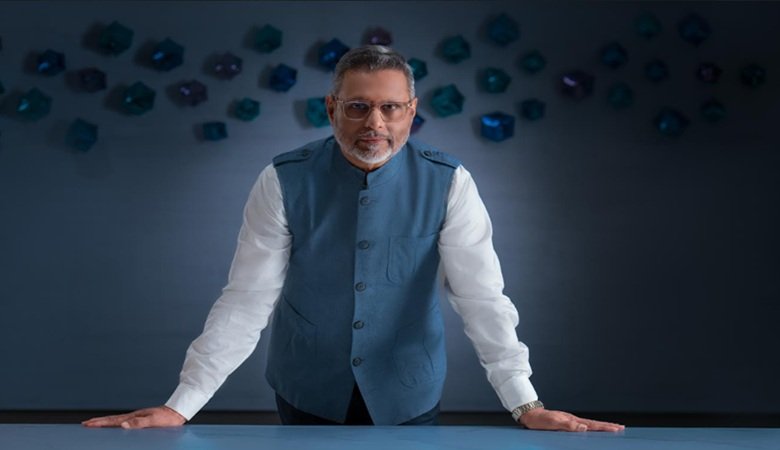
In an interview with EduKIda, Dr Chenraj Roychand, Founder Chairman of JAIN Group and Chancellor of JAIN (Deemed-to-be University), talks about how higher education in India is changing as students increasingly look beyond degrees to skills, employability and real career outcomes. Drawing on more than four decades in education, he discusses the rise of online learning, the role of AI in the classroom, changing expectations among students and working professionals, and the challenge of keeping curricula relevant as technology and industry needs evolve. He also reflects on JAIN’s investment in entrepreneurship and sport, and on what Indian higher education still needs to get right.
Jain ( Deemed to be University) was founded in 2008 so much before “employability” became a buzzword in Indian higher education. When did you first notice the shift — students, employers or the government starting to demand a degree that actually leads somewhere, rather than just a certificate?
The shift did not announce itself. It emerged gradually, in conversations with students and parents at JAIN over the years, long before it found its way into any boardroom discussion or policy paper. A degree was once seen as a destination in itself, something earned, framed, and held up as evidence of having “arrived.” What I began to notice, almost imperceptibly, was a change in the question parents asked at the point of admission. It was no longer “What will my child study?” but “What will my child be able to do once this is behind them?” That subtle shift in language told me something larger was already underway.
Employers were hiring less for credentials and more capability of people who could think independently, apply what they had learned, and contribute from day one. The market, in other words, was quietly rewriting the definition of education before universities caught up with the conversation.
Then came the generational shift. Today’s learners are more career-conscious than any generation before them. They do not wait until graduation to think about employability questions of placement, industry exposure, and skill relevance surface from the moment they enroll. This has changed what higher education is expected to be: no longer adjacent to the world of work, but woven into it. This is the conviction that has guided us in JAIN.
The JAIN Online, our e-learning Programs, was built on the belief that a degree today must also function as a career springboard. It is why we have built AI-integrated curricula, embedded industry tools, and direct industry partnerships into the fabric of our programs not as additions, but as what a meaningful degree now requires.
In 2021, UGC-DEB gave JAIN the approval to offer online programs under the auspices of CDOE ( Centre for Distance and Online Education ). This was a turning point.
The UGC’s newer regulations push universities toward skill-integration and multiple entry-exit options, in line with NEP 2020. How much of what JAIN Online already does was ahead of that curve, and how much has the university had to rebuild to keep pace with the new rules?
When NEP 2020 was introduced, and people began asking how much “rebuilding” it would demand of us, our first reaction was one of relief. So much of what the policy called for felt familiar. Flexibility, multidisciplinary learning, skill integration, a learner-centred approach, these were not ideas we had suddenly discovered. They had already been shaping how we thought about education, years before the policy gave them a name.
That said, I would not claim we foresaw the entire framework that would not be an honest representation of events. NEP 2020 and the accompanying UGC regulations lent structure and precise language to practices we had already begun. They pushed us, in a meaningful way, to formalise what had until then been organic, to build systems and documentation around entry and exit points, credit transfers, and skill integration. These were no longer informal habits; they became verifiable, measurable components of how a degree is delivered. So this was not a rebuilding from the ground up. It was a strengthening of a direction already in motion.
At JAIN Online, that has been the underlying spirit throughout. We did not view the regulation as a checklist to be completed, but as a validation of a path we were already on a nudge to continue improving the learner’s actual experience. Whether it is a working professional who needs to pause their studies and return later without losing progress, or a student wishing to explore subjects beyond a single discipline, our objective has remained constant: to make the degree fit the life the learner is living, rather than compel the learner into a fixed mould. The regulation simply gave us a firmer foundation on which to continue doing that well.
You’re serving both Gen Z students fresh out of school and working professionals returning to study years later. Do these two groups want fundamentally different things from an online degree, or is the gap smaller than people assume?
On the surface, these two groups appear to have little in common, a twenty-year-old fresh out of school, and a working professional balancing a career and, often, a family.
Yet when we listen closely to both, the distance between them is far smaller than it appears. At their core, each is asking the same question: “Will this change something for me?” Neither is pursuing education for its own sake any longer; both want it to move their life forward.
Where they differ is in what “forward” means. Younger students look outward, toward that first significant opportunity. Their anxieties centre on employability and industry exposure, they want to step out into the world ready to be taken seriously. Working professionals, having already proven themselves, look at it differently. What they seek is flexibility, relevance, and a return that materialises quickly, whether that is a promotion or simply a greater sense of capability in their current role.
So no, we do not believe these are fundamentally different learners. They are the same learner, at two different points in life, seeking the same purpose from us. At JAIN Online, that is the thread we hold on to: an experience flexible enough for the working professional, yet rich enough in exposure for the young graduate. Different journeys, arriving at the same destination, a degree that genuinely means something.
With 91,000+ learners across 45+ countries, is there a noticeable difference in what a learner in a tier-2 Indian city expects from JAIN Online versus a working professional studying from abroad?
Response: Geography matters far less than people tend to assume. It is individual circumstance, far more than location, that shapes what a learner needs from us. A student in a Tier-2 city is typically looking for accessibility and affordability, a genuine opportunity to access quality education and career exposure that may not otherwise be available locally. An international working professional, by contrast, is balancing a full-time career across time zones, and for that individual, the priorities are flexibility and global relevance: will this qualification hold its value wherever their career takes them next?
Technology is what allows us to serve both kinds of learners without compromising on standards. It enables us to meet each learner wherever they are, while keeping our rigour unchanged. Whether a learner logs in from a small town or from another continent altogether, the degree, and the expectations behind it, remain the same, offering genuine value and real opportunity, regardless of where the learning takes place.
What’s a demand from students today that would have seemed unreasonable or unnecessary a decade ago, but that JAIN Online now treats as standard?
Response: A decade ago, had a student asked for round-the-clock access to a faculty member, or expected the university to sit down and think through their individual career path with them, I would likely have considered the request somewhat excessive. Today, at JAIN Online, that is simply the baseline. Something has genuinely shifted. Students now expect a degree of personal attention that our institutions were not built around a decade ago, prompt access to faculty when they are stuck, career support that feels personal rather than generic, meaningful industry exposure, and room to learn beyond what is written in the syllabus. None of this registers to them as a privilege any longer; it is the baseline expectation.
What strikes us most about this shift is the expectation that underlies it. Students no longer want a university that simply hands them a curriculum and wishes them well. They want an institution that understands where they are headed, their apprehensions, their ambitions, the particular shape of their career journey, and walks alongside them through it. That is a considerably larger undertaking than it may sound, and it is precisely the one we have quietly rebuilt ourselves around.
Every university claims to be “AI-integrated” right now. What does that phrase actually mean inside JAIN Online’s curriculum — is AI a subject being taught, a tool being used to teach, or both?
When people hear the phrase “AI-integrated curriculum,” I suspect many picture something quite simple — an additional subject appended to the timetable, an “Introduction to AI” module tacked onto whatever a student is already studying. That is not what we mean by it, and if it were, we do not believe the term would be worth using at all.
For us, the concept operates at two levels. The first is learning about AI — understanding the technology itself, how it functions, and both its capabilities and its limits. The second, the more consequential one, is learning with AI — using it as a working tool within whatever discipline a student is actually pursuing. A commerce student needs to understand how AI is reshaping finance and analytics; a business student needs to see how it is altering decision-making and strategy. It must live inside the subject, not sit alongside it.
With this comes a certain responsibility. We have no interest in producing students who rely on AI to think on their behalf — our aim is precisely the opposite. The emphasis must remain on critical thinking: using the technology meaningfully and responsibly, and understanding when to trust it and when to question it. If a student leaves us more dependent on AI rather than more capable because of it, we will have failed at the one thing that genuinely matters.
The”AI-integrated” at JAIN Online — is not a badge affixed to the curriculum, but a discipline of teaching students to think alongside what is quickly becoming an ubiquitous tool.
Rolling out AI-related content across 44+ specialisations is very different from doing it in one flagship programme. What’s been the hardest part of keeping that rollout consistent in quality across such a wide spread of courses?
The genuine challenge here is not the introduction of AI itself — that part is, in fact, relatively straightforward. The more demanding task is resisting the temptation to insert an identical AI module into every programme simply to claim comprehensive integration. That approach would be superficial, and it would not serve the student in any meaningful way.
AI carries a different meaning depending on the discipline in question. A finance student needs to understand AI-driven analytics and risk modelling. A marketing student needs to understand its role in consumer behaviour and campaign optimisation. A computer applications student must go considerably deeper, into the underlying mechanics of the technology itself. To treat all of these uniformly would be a disservice to every student involved.
This is why the more substantial work takes place behind the scenes — ensuring that faculty across disciplines are genuinely prepared to teach this material, rather than simply handed a set of slides and asked to deliver it. Academic quality and consistency do not occur by chance; they require real investment in preparing those responsible for teaching, programme by programme.
Our objective, therefore, was never to maximise the number of AI-related courses listed in a brochure. It was to ensure that wherever AI appears within a JAIN Online programme, it is genuinely relevant, genuinely useful, and genuinely deepens what the student is there to learn, rather than simply adding to the length of the curriculum.
Are you worried at all about curriculum built around today’s AI tools becoming outdated within a couple of years, given how fast the technology itself is changing?
Had we built our curriculum around today’s specific AI tools, I would indeed be concerned, because those tools will look markedly different, perhaps even unrecognisable, within two years. It is precisely for this reason that we made a deliberate choice not to construct it that way.
Our focus rests on fundamentals, problem-solving, adaptability, digital literacy, and an understanding of how AI functions within a given discipline, rather than proficiency in operating any one particular application. Tools will continue to change; that much is a given. What must remain constant is a student’s capacity to learn and adapt to whatever comes next. On our part, this means curriculum cannot be treated as something built once and left untouched. It must be reviewed and refined continuously, almost as a discipline unto itself.
You have led the JAIN Group for more than four decades now, moving from a single college in 1990 to a NAAC A++ deemed university with a large online arm. What’s a decision from those early years you’d make very differently today, knowing what you know now?
Response: When we look back at the journey from a single college in 1990 to where JAIN Group stands today, a NAAC A++ deemed university with a substantial online arm, I cannot point to one specific decision and say, “I got that wrong; I would undo it.” The truth is considerably more nuanced.
To be very honest, the most significant learning from these four decades has not come from any single choice, but from the realisation that education cannot be built around a fixed, long-term formula. When we began, we planned the way most institutions did at the time, for the long haul, on the assumption that the fundamentals would not shift too dramatically. Technology, learner expectations, and industry requirements, however, have all changed far more profoundly than I could have anticipated in those early years. The institutions that endured, and indeed grew, were the ones that remained agile rather than rigid.
Quality education, entrepreneurship and sport aren’t the most obvious three things to build simultaneously. Was there ever a moment where one of these pulled resources or attention away from the others in a way that worried you?
I will not suggest that the process was always seamless. Building three institutional pillars simultaneously inevitably meant that priorities, at times, genuinely competed for the same time, the same resources, and the same attention. Anyone who claims otherwise about running an enterprise of this complexity is, I suspect, not being entirely candid.
I never allowed myself, however, to view it as one pillar drawing away from another — not for any sustained period. Whenever I felt that tension, I would return to a single question: does this serve the overall development of the student? For that, ultimately, is what education, entrepreneurship, and sport have in common at both JAIN and JAIN Online, they are not three separate ambitions, but three distinct routes to the same destination. A student who learns discipline on a sports field carries that discipline into how they approach a business idea. A student who takes the risk of starting a venture carries that same confidence into the classroom.
So while there were moments that tested my patience, and occasions when I wondered whether we were spreading ourselves too thin, I have never regretted treating these pursuits as complementary rather than competing. The underlying objective was always to cultivate individuals with discipline, confidence, leadership, and the capacity to perform beyond academics alone. That is not an outcome any single pillar could achieve on its own.
Producing 9 Olympians and 3 Paralympians is a remarkable outcome for an educational institution. Why did JAIN choose to invest in sport as seriously as it does academics, and how do you ensure the two reinforce each other rather than compete for a student’s time and focus?
At JAIN, sport was never conceived as an add-on to occupy students after class; it is an integral part of education. Character is not built at a desk alone. Elite sport instils discipline, resilience, teamwork and the capacity to perform under pressure, qualities that endure well beyond the field. Producing Olympians and Paralympians, however, requires more than good intentions. It demands sustained investment, world-class infrastructure, quality coaching and an academic framework flexible enough for athletes to pursue both paths seriously. It is a long-term commitment, and the returns take years to materialise.
The most meaningful return has been what followed the first success. Once a handful of our athletes reached that level, younger students began to regard sport as a legitimate pursuit rather than a distraction from a “real” one. There is, of course, tension. An elite athlete and a student preparing for examinations draw on the same limited hours. But it need not become a conflict when the institution builds the right structure: flexible academic arrangements, faculty who understand a competing athlete’s demands, and timetables that adapt to the student rather than the reverse.
Indeed, the two reinforce each other. The focus, resilience and composure that sport cultivates carry directly into academic and professional success. Our objective is that no student should ever have to choose between excelling in sport and receiving a first-rate education.
If you had to guess, what will an online degree look like in India a decade from now — will it still resemble what JAIN Online offers today, or something closer to short, stackable, employer-recognised credentials?
Response: If pressed to venture a guess, I do not believe this will unfold as an either-or narrative. I expect it will be both, existing side by side. Online education a decade from now will likely be considerably more modular, personalised, and closely aligned with industry than what we observe even today. Shorter credentials, certifications, and stackable learning pathways will, I believe, become a far larger part of how individuals build their qualifications, piece by piece, at their own pace, alongside or even within a formal degree.
That said, I do not believe this signals the degree’s fading relevance, nor that its worth reduces to a matter of packaging. A degree’s value has never truly stemmed from its length or format; it derives from academic depth, institutional credibility, and the actual capability it builds in a person. That fundamental truth does not change simply because delivery formats continue to evolve.
So if asked where the real shift is headed, I would say it is no longer a matter of “online versus offline”, that debate already feels somewhat dated. The more pertinent question a decade from now will be how intelligently institutions combine technology with varied learning formats to offer a learner something both flexible and genuinely credible. That, in my view, is the direction worth betting on.
What’s one thing about Indian higher education that you think still needs to change, that even institutions like your own haven’t fully solved yet?
Response: For us, the gap that still hasn’t fully closed, anywhere including within our own institutions is between what students learn and what they can actually do with it. It’s tempting to say that gap has narrowed a lot over the years, and it has, but it hasn’t disappeared. Not yet.
Part of the problem is that institutions, including established ones, tend to lean on models that worked well a decade ago, without continuously rethinking curriculum, assessment, and industry engagement the way the world around us keeps changing. We also still need far greater emphasis on critical thinking, interdisciplinary learning, adaptability, and lifelong learning, the things that actually outlast any single job title or technology cycle, but are much harder to teach than a fixed syllabus.
And I say this including JAIN Online in the reckoning, not standing outside it. Even an institution that’s grown as much as ours has, that’s earned recognition and credibility over decades, we have to keep reminding ourselves there’s no finished model of higher education. The day you believe you’ve solved it completely is probably the day you’ve already started falling behind.