


“Design Education Must Move Beyond Jobs to Real-world Impact”

Share
Design is no longer confined to studios or sketchbooks. It now sits at the centre of how products are built, how businesses grow, and how societies solve real problems. From AI tools to grassroots innovation, the role of a designer is expanding fast, and so is the pressure on institutions to keep pace.
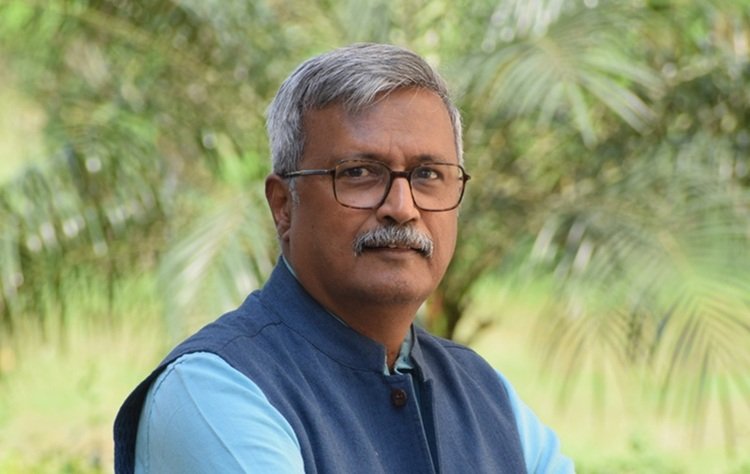
In this conversation, Prof. A. Balasubramaniam, Director, Institute of Design at JK Lakshmipat University (JKLU), reflects on what design education needs to look like today. He speaks about moving beyond theory to real-world problem solving, why sustainability must be part of every design decision, and how India can build a stronger global design identity by blending technology with its craft heritage. He also lays out why the future designer must be as comfortable with systems, strategy and entrepreneurship as they are with creativity.
Design is changing fast. How should design education change to make students ready for real jobs today?
Design education must emphasize that students must be ready for a career and not just fill jobs. Industry should benefit from hiring design graduates who bring a fresh perspective. At our university, we emphasize live projects, interdisciplinary collaboration, and exposure to real-world constraints like budgets, timelines, and user diversity. Students should graduate with portfolios built on actual problem-solving, not hypothetical briefs.
We also focus on adaptability, teaching students how to learn new tools and approaches quickly. Soft skills like communication, storytelling, and collaboration are built into the curriculum. Ultimately, design education must prepare students to “think, adapt, and deliver impact” in a constantly evolving professional landscape.
Students now need to learn AI, AR and new tools. How can colleges mix these with basic design thinking?
Emerging technologies like AI and AR should not replace design thinking, they should enhance it. We integrate these tools as enablers within the design process rather than standalone subjects.
For example, students might use AI for ideation or AR for prototyping experiences, but always grounded in empathy, user research, and problem definition. The core principles of design thinking, understanding users, defining problems, ideating, prototyping, and testing remain unchanged. By embedding new technologies into each stage, students learn to use them meaningfully rather than superficially, ensuring they remain problem-solvers first and tool-users second.
You have worked closely with grassroots innovators. What can big design schools learn from small local creators?
Grassroots innovators bring a level of ingenuity, frugality, and contextual understanding that formal systems often overlook. They design with deep empathy because they are part of the communities they serve. Big design schools can learn the value of constraints, local materials, and culturally rooted solutions.
We encourage students to engage with rural and informal sectors to understand real needs beyond urban assumptions. This exposure builds humility and creativity. It also teaches students that impactful design does not always require advanced technology; it requires insight, relevance, and the ability to create solutions that truly fit people’s lives.
How can design help MSMEs grow and reach bigger markets?
Design is a powerful strategic tool for MSMEs, not just an aesthetic layer. It can improve product usability, branding, packaging, and customer experience, making businesses more competitive in both domestic and global markets. We work with MSMEs to help them tell compelling stories about their products, especially those rooted in tradition.
Design also enables standardization and scalability without losing uniqueness. By adopting digital tools and user-centered approaches, MSMEs can better understand their customers and expand reach through e-commerce platforms. Ultimately, good design helps MSMEs transition from local producers to recognizable brands.
Sustainability is often taught as one subject. Should it be part of every design project instead?
Absolutely. Sustainability cannot be an isolated subject; it must be embedded into every design decision. At our university, we treat sustainability as a fundamental design lens, much like usability or aesthetics. Every project requires our B.Des and M.Des students to consider environmental impact, lifecycle, and resource efficiency.
This approach helps students internalize sustainable thinking rather than treating it as an afterthought. By integrating sustainability across disciplines, product, fashion, architecture, and digital design, we ensure that graduates naturally approach problems with responsibility. The goal is to create designers who see sustainability not as a constraint, but as an opportunity for innovation.
How can students learn to use eco-friendly materials and think in a circular way?
Students need hands-on exposure to materials and systems to truly understand sustainability. We encourage material experimentation in labs where students work with natural fibers, recycled components, and biodegradable alternatives. Beyond materials, we teach circular design principles, designing for reuse, repair, and recycling. Industry partnerships also help students see how circular systems operate in real businesses.
Importantly, we push students to think beyond the product to the entire lifecycle, including supply chains and end-of-use scenarios. This holistic approach ensures they design not just for immediate use, but for long-term environmental and social impact.
India has strong craft and heritage. How can we mix this with new technology to stand out globally?
India’s craft heritage is a unique strength that, when combined with technology, can create globally differentiated design. The key is respectful integration—using technology to enhance, not replace, traditional skills. For instance, digital tools can help artisans scale production, improve consistency, and access global markets through e-commerce.
At our university, we facilitate collaborations between students and artisans, where design innovation meets traditional craftsmanship. This fusion creates products that are both culturally rich and contemporary. By positioning craft as a source of innovation rather than nostalgia, India can establish a distinctive global design identity.
What is stopping Indian design from getting more global recognition today?
Indian design has immense potential, but several challenges remain. One is the lack of strong global branding and storytelling around Indian design narratives. Another is limited industry-academia collaboration, which affects the scale and visibility of innovation. We also need more investment in research and intellectual property development.
Additionally, many designers still focus on local markets without adapting for global audiences. Encouraging international collaborations, global exposure, and cross-cultural design thinking should be the way forward. By building confidence in our unique perspectives and improving how we present them, Indian design can achieve greater global recognition.
Product design is expanding fast. What new skills should students focus on now?
Product design today goes far beyond physical objects, it includes digital experiences, services, and systems. Students need to develop skills in user research, systems thinking, and data-informed design. Familiarity with emerging technologies like IoT and AI is important, but equally critical is the ability to design seamless user experiences across platforms.
Prototyping, storytelling, and collaboration with engineers and business teams are essential. We also emphasize ethical design, considering privacy, accessibility, and social impact. The most successful designers will be those who can bridge creativity with technology and strategy, creating solutions that are both innovative and meaningful.
Do you think more design students should start their own ventures instead of only looking for jobs?
Yes, entrepreneurship should be a strong pathway for design students. Designers are natural problem-solvers, and this mindset is ideal for building ventures. We actively encourage students to explore startups through incubation programs, mentorship, and industry partnerships. Starting a venture allows designers to apply their skills holistically, from ideation to market launch.
However, entrepreneurship also requires resilience and business understanding, so we integrate these aspects into our curriculum. While jobs remain important, empowering students to create their own opportunities can drive innovation, generate employment, and position design as a key contributor to economic growth.
After Budget 2026, what changes do you see for design education and the industry?
Budget 2026 signals increased focus on innovation, manufacturing, and digital transformation, all of which directly impact design. There was also a mention about the need for more designers. A new NID is East India has been proposed. This could lead to greater funding for skill development, research, and startup ecosystems. This creates opportunities for design institutions to collaborate more closely with industry and government initiatives.
There is also likely to be stronger emphasis on emerging technologies and sustainability. This means aligning our curriculum with national priorities, preparing students to contribute to sectors like manufacturing, mobility, and digital services. Overall, the budget reinforces the role of design as a strategic driver of economic and social progress.
How can design education support India’s manufacturing and startup growth in the coming years?
Design education can play a pivotal role by bridging creativity with manufacturing and business strategy. We focus on teaching design for manufacturability, ensuring products are not only innovative but also feasible to produce at scale. Collaborations with startups allow students to work on real challenges, from product development to branding and user experience.
By nurturing interdisciplinary skills and entrepreneurial thinking, design education can help build a workforce that drives innovation, supports “Designed in India and Made for the world” initiatives, and strengthens the country’s global competitiveness.