

At IIT Delhi Alumni Meet, Focus Shifts from Self-reliance To Synergy

Share
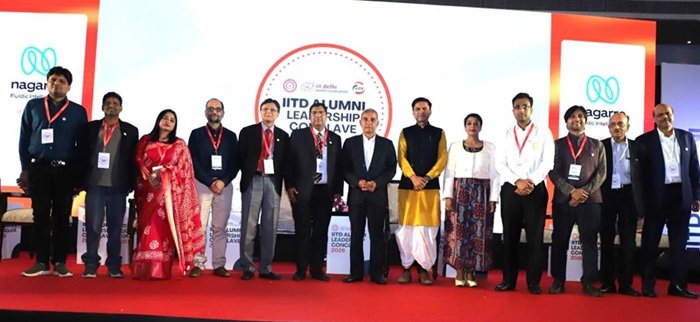
More than 400 IIT Delhi alumni—including founders, senior executives, policymakers, and young professionals—gathered in Delhi. However, the tone of the evening shifted away from individual success toward the power of collective action. The IIT Delhi Alumni Leadership Conclave 2026 tried to answer a simple question. What does self-reliance mean today?
The theme, “Era of Symbiotic Atmanirbharta”, set the direction early. Speakers kept coming back to one idea. India cannot grow in isolation. It needs strong local capabilities, but also global partnerships.
Kalpen Shukla, president of the IIT Delhi Alumni Association, said leadership today is not about position. It is about vision and the ability to bring people together. That message ran through most discussions that evening.
The gathering itself reflected that shift. The alumni network now has over 65,000 members across the world. Many of them are leading companies, building startups or working in public service. Yet, the focus here was less on achievements and more on how to collaborate better.
One panel that drew attention was on artificial intelligence. Titled “AI and Humanity: Friend, Foe, or Future?”, the discussion moved beyond the usual fear of machines replacing humans. Speakers said AI should be seen as a partner, not just a tool.
But there was also caution. They spoke about the need for ethics, data privacy and keeping people at the centre of technology. The message was clear. AI may shape the future, but how it is used will decide its impact.
Another discussion looked at startups. From idea to IPO, the journey is getting more complex. Speakers said building a company today is not just about a good idea. It needs a strong ecosystem.
Mentorship, funding and partnerships came up as key factors. Founders and investors, they said, must work closely instead of pulling in different directions. The startup story, like everything else, is becoming more collaborative.
Education was another big theme. A panel on “Inclusive Learning for the Unknown” focused on how the current system is struggling to keep pace with change. Jobs are evolving fast. Skills are becoming outdated quickly.
Speakers said learning cannot stop after college. It has to continue through life. There is also a need for closer ties between industry and academia. Without that, the gap between what students learn and what jobs need will keep growing.
In between these discussions, the event paused for a moment of recognition. Forty-four alumni were honoured for securing top ranks in the UPSC Civil Services Examination 2025. It was a reminder that the institute’s impact goes beyond business and technology.
The presence of public figures like MP Shashank Mani and former minister Satyapal Singh added to the mix of voices. The conversations moved easily between policy, business and society.
What stood out through the evening was the shift in thinking. For years, the idea of Atmanirbhar Bharat was often seen as standing on one’s own. At this conclave, it was described differently.
Self-reliance, speakers said, is not about doing everything alone. It is about being strong enough to work with others on equal terms.
That idea also showed up in the kind of sectors people spoke about. Clean energy, digital infrastructure, education, AI. All of them need multiple players working together. No single company or institution can handle them alone.
Even within the alumni network, there is a push to build stronger links. Senior professionals mentoring younger graduates. Founders helping new entrepreneurs. Investors backing early ideas.
The conclave ended without big announcements. But that was not the point. It was more about setting a direction.
As one speaker put it during a panel, the next phase of growth will not come from competition alone. It will come from cooperation.
For an audience that has seen India’s rise from close quarters, that message seemed to land well.
The evening closed on a quiet note. People stayed back, talking in small groups, exchanging contacts, picking up conversations that may turn into partnerships later.
If there was one takeaway, it was simple. The future may belong to those who can build together, not just build alone.