


Why “Applying” Sunscreen Isn’t Enough Anymore: The Rise Of Wearable Sun Protection In India

Share
For years, sun protection has been reduced to a simple habit: apply sunscreen and step out. But as UV levels rise and lifestyles become more on-the-go, dermatologists and skincare experts are beginning to question whether application-based protection alone is enough. A growing school of thought now points toward a more consistent approach—physical sun protection.
Unlike sunscreen, which requires timely reapplication and often wears off through sweat, friction, or time, physical protection works as a constant barrier. It doesn’t depend on routine—it integrates into it. This shift is what led Arifa Shah, Founder of Umbrashield, to rethink how sun protection fits into everyday life.
“Like most people, I believed sunscreen was enough,” she says. “But the more I understood how inconsistent usage really is—especially in Indian conditions—the more I felt the need for something that works continuously, without depending on perfect habits.”
What started as a personal observation soon turned into a focused exploration of wearable UV protection, a category still relatively new in India but steadily gaining relevance globally. Umbrashield was built on this idea—creating products that allow people to wear their sun protection, rather than rely on reapplication cycles.
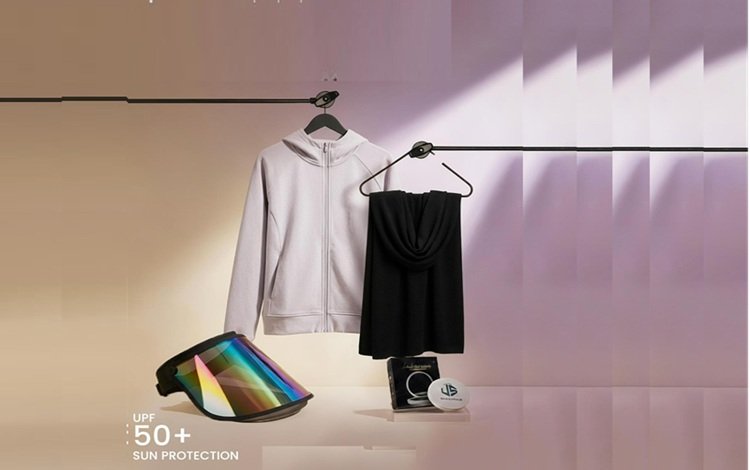
At the core of the brand is the UV Shield Visor, designed as a primary layer of wearable sun protection. Unlike fabric-based solutions, the visor is crafted using a specialised protective film engineered to block 98–99% of harmful UV rays, offering consistent coverage for the face without relying on reapplication. Available in full-length and half-length formats, it is lightweight, breathable, and fully see-through—allowing ease of movement while creating a protective barrier. Its utility extends beyond everyday wear into outdoor activities such as tennis, badminton, and pickleball, where sun exposure is continuous and often overlooked.
Supporting this are the brand’s UV garments, including jackets and scarves, developed using tightly constructed, high-performance UPF-rated fabrics. These are designed to complement the visor—extending protection to the body while remaining breathable and practical for daily use.
Complementing these is the UV Smart Mirror, a more diagnostic approach to sun care. Designed to highlight uneven sunscreen application, it reveals areas that are often missed—bringing attention to how inconsistent protection can be, even when we believe we’ve applied it correctly.
Together, these products reflect a broader shift in how sun protection is being understood—not as a single step, but as a system.
For individuals with sensitive skin, acne concerns, or those undergoing dermatological treatments, this shift becomes even more relevant. Post-procedure skin, in particular, is more vulnerable to UV damage, making consistent protection essential but often difficult to maintain through sunscreen alone.
Wearable solutions attempt to bridge that gap—offering a layer of protection that doesn’t rely on memory, timing, or reapplication. What makes this category interesting is not just its functionality, but its growing alignment with lifestyle. As design, comfort, and wearability improve, sun protection is gradually moving into the realm of everyday essentials—something you step out in, not just apply before you do.
For Arifa Shah, the vision remains simple: “Sun protection should work with your life, not interrupt it.”
As awareness grows, wearable UV protection may well become less of an alternative—and more of a natural extension of how we think about skin health in everyday life.