


How Digital Distraction Is Changing Way Students Learn & Engage In Classrooms

Share
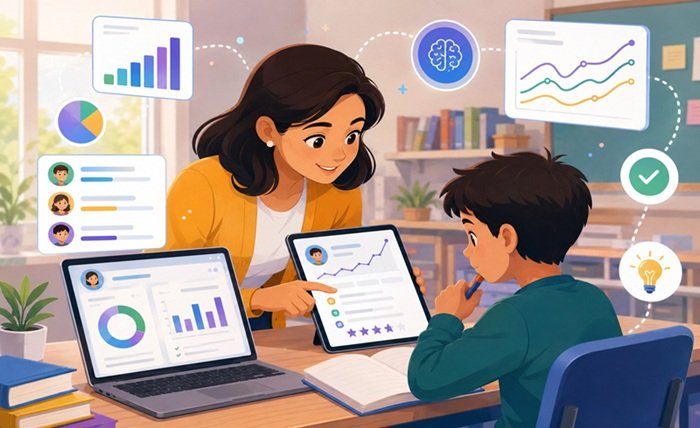
Learning today is robust and more dynamic than ever before. Students have more information, advanced technology and better learning options than ever. But with new developments in how children interact with the world, our concepts of learning should change as well. Learning should be measured not only on how much students can memorize, but on how deep they can concentrate, comprehend, connect and apply new knowledge.
Traditionally, the academic achievement of a student was judged based on their grades. But with the increasing number of digital devices around us, learning methods are also evolving. A student may have access to more information than ever, yet access does not necessarily translate into understanding.
From Knowing to Applying
The shift towards application does not reduce the significance of academic knowledge; it focuses on using that knowledge effectively. Deeper learning occurs when students apply scientific ideas in new contexts or use language to interpret information and build arguments.
Digital distraction can hinder this process. Students are accustomed to fast-paced, multitasked information consumption, while education demands sustained focus, reflection and patience. OECD’s PISA 2022 data shows nearly 30% of students in OECD countries reported digital distraction in most mathematics lessons. Students distracted by peers using digital devices scored 15 points lower in mathematics, even after accounting for socioeconomic factors. Application-based questions and competency tasks strengthen academic rigour through projects, investigations, experiments, interdisciplinary activities and problem-solving.
The Parent’s Role in Redefining Achievement
Parents play an equally important role in helping children develop healthy learning and digital habits. As success in school evolves beyond grades, parents can encourage children to value curiosity, effort and progress alongside academic achievement.
Children also learn how to use technology by observing the adults around them. When parents model balanced digital behaviour, create screen-free moments during meals and conversations, and encourage focused time for homework, they help children build healthier relationships with technology and learning.
A More Complete Picture of Student Progress
A meaningful report card should show parents how their child learns, not just a collection of marks. Some schools are moving towards detailed progress reports functioning as comprehensive learning records, documenting academic progress, participation, communication, collaboration, creativity, interests, learning habits and areas for improvement, drawing on teacher observations, student reflections, projects and portfolios.
When digital distraction affects the classroom, healthy learning habits become even more important. A student may know the answer but struggle to sustain attention long enough to grasp a complex idea. This won’t show on a conventional mark sheet, but it reveals how a child is learning. Academic scores remain important but are more meaningful alongside a student’s ability to communicate, collaborate, reflect, overcome challenges and apply knowledge.
Equipping Students for an Evolving Future
The changing nature of work enhances the importance of competency-based learning. As stated in the World Economic Forum’s Future of Jobs Report 2025, about 40% of the skills that will be needed at work are predicted to change by 2030. Besides, 63% of the employers point out the skills gap as the main obstacle to transformation.
The ability to transfer learning into practice, work in teams, analyze information and adapt to changes is what students will need. In order to link classroom learning with practice, inquiry-based learning, experiential learning and project-based learning might be used. The above-mentioned competencies require constant attention, which is why future-focused education should equip students not only with the technological skills but also with the timing of applying them.
Technology Should Enhance Assessment, Not Determine It
Technology is changing assessments, providing consistency, coordination, and efficiency during evaluation. The issue at hand is not whether technology should be used in education, but rather if it assists students in understanding the content or if it just makes sure that the students remain glued to their computer screens. Speed of process does not equal relevance of the assessment.
Digital tools should be integrated with clear purpose, not made central to a lesson simply because they’re available. Technology aids efficiency but cannot replace the human understanding, teacher observation and conversation that assessment depends on.
Redefining Success Together
Real transformation depends not just on how schools assess students, but on how adults interpret those assessments. Academic achievement must be looked at together with critical thinking, communication, collaboration, problem-solving and learning continuously, including being able to concentrate, reflect and use technology responsibly.
The report card of the future is not just for children; it is a reflection on the adult that is teaching the child, so parents can understand the learner behind the grades. Children do not learn only through what schools teach them but also what values adults place on certain things. Digital technology will remain an important part of education and the future of work. The objective is not to distance children from it but to encourage intentional use of it while maintaining deep thinking, patience and curiosity.
Views expressed are personal
The author, Dr Silpi Sahoo, is Chairperson, SAI International Education Group