
How Grassroots Education Can Drive Social Change

Share
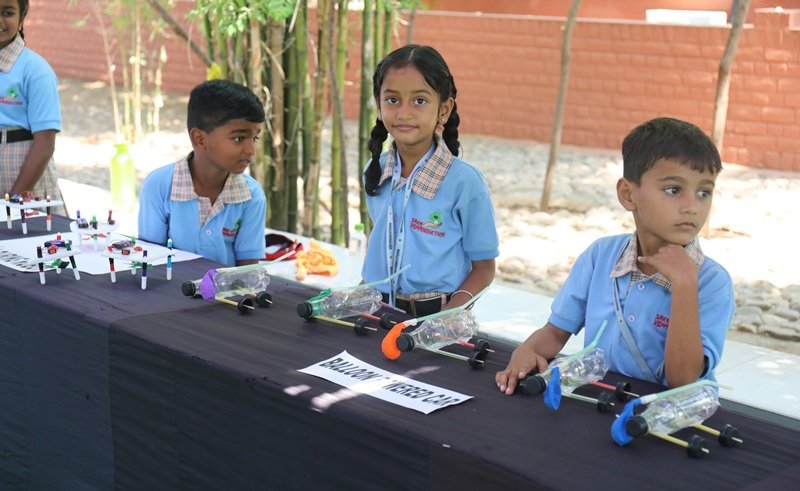
Education is generally seen as one of the most effective means of achieving social mobility. Yet for a great many young people, particularly those coming from disadvantaged communities, getting access to a classroom is only the start.
A young person’s future can be just as greatly influenced by their ability to communicate with confidence, to think critically, to understand financial decisions and to make informed choices. Since India’s economy is becoming more and more based on skills, education should be preparing young people ever more thoroughly for real life and for their working lives, not merely for exams. The World Bank has also stressed the importance of investing in human capital and in skills that are relevant to the labour market in order to take advantage of India’s demographic dividend.
Bridging the Gap Between Learning and Life
Formal education offers a good academic background. Grassroots interventions can be a complement, helping students to connect what they learn in classrooms with the world around them.
Communication, public speaking, financial literacy, problem solving and critical thinking can instil the confidence necessary for students to take advantage of opportunities that may otherwise feel unfamiliar or out of reach. This is especially true for young people who have had little experience in professional environments or career opportunities outside of their immediate communities.
This understanding is at the heart of the work we are trying to build through The Noemara Elara Foundation, a student-led organisation working with children from underserved communities. What began as informal teaching has gradually grown into a wider effort involving a core team, volunteers and partnerships with schools and other organisations.
The goal is not to create additional academic pressure, but to provide students with opportunities to learn through doing, to express themselves and to become comfortable with independent thinking.
One Student Can Change the Way We See Education
My own understanding of this began with a deeply personal experience. In 2024, I was running evening classes for some children at my home when I learnt that one of my students, a 16-year-old girl, was at risk of dropping out of school because of an impending child marriage. After several discussions with her and her family, they agreed to delay the marriage and support her education. She is now a Class 12 pass-out and financially independent.
That experience changed the way I viewed education. I realised that sometimes impact cannot be measured by marks or certificates. Sometimes education gives a young person the confidence to make an informed choice about their own life.
It was this realisation that motivated me to build a larger effort around helping students from underserved communities access practical learning, mentorship and opportunities.
The Power of Exposure
In education, it is often exposure that is the biggest inequity, not ability. Maybe a student who has never been part of a debate at the beginning might not consider themselves a confident speaker. A child who has never been exposed to financial literacy may not know the importance of it. Experiences like these can help to change the way students see themselves and what they believe is possible.
This is why one of our initiatives, Awaaz Bharat, focuses on public speaking, communication, debate and confidence-building. The opportunities to debate, to argue, to participate in Model United Nations and simply to speak in front of an audience develop skills that go much further than the activity itself. Most importantly, they help students find their own voice.
There is another reason why these matters. Children and families from underserved communities face problems that people outside those communities can identify and try to address, but no one can communicate those problems better than the person experiencing them. Giving someone a voice is therefore not simply about making them more confident. It is about helping them explain their own problems, in their own words and in their own voice, to the people who can help address them. In that sense, young people can move from being on the receiving end of change to becoming participants in creating it.
Our other programs and soon-to-come programs also focus on such skill development that allows students to translate what they learned with us in the real world.
From Confidence to Opportunity
Confidence, however, needs to be supported by sustained mentorship and access to opportunities. Schools, educators, families and civil society organisations can have an important role in this area.
As our organisation has grown, this has also become one of the biggest lessons for me. Reaching more students is not necessarily the same as creating more impact. A session can be counted, a student can be counted and a programme can be counted. What is much harder to measure is whether a student became more confident, retained what they learnt or actually used it outside the programme.
The best grassroots education is responsive to the realities of the communities it serves and is aimed at long-term capability building. This also explains why it has to be a constant effort, given the Indian education landscape. The ASER 2024 survey shows improvement in the basic reading and arithmetic levels of children in government schools, but also reveals that learning outcomes still vary widely across grades and states.
The key is to build places where students are empowered to question, to experiment, to learn from their errors and to try again.
Making Education a Pathway to Social Change
The demographic potential of India is closely linked to the opportunities open to its young people. If young people are to be prepared for the future, it will be necessary to provide them not only with academic knowledge but also with confidence, adaptability and a range of skills which enable them to take an active part in both society and the economy.
Grassroots education is able to bring about this change because it begins within the communities it wishes to serve. It can identify obstacles at an early stage, take account of local conditions and make learning more relevant to students’ lives.
As The Noemara Elara Foundation grows, our responsibility is not simply to reach more children, but to ensure that the quality and purpose of the work grow with it.
Big interventions do not always kick off social change. Sometimes it starts with one student staying in school, one child finding the confidence to speak or one young person realising their circumstances do not have to define their future.
When education is more than textbooks and makes these possibilities available, its impact can go far beyond the individual. It can strengthen families, create more confident communities and, over time, help create a generation better placed to shape their own future.
Views expressed are personal
The author, Divit Narang, Founder, The Noemara Elara Foundation