

“Don’t Invest In Something You Don’t Understand”

Share
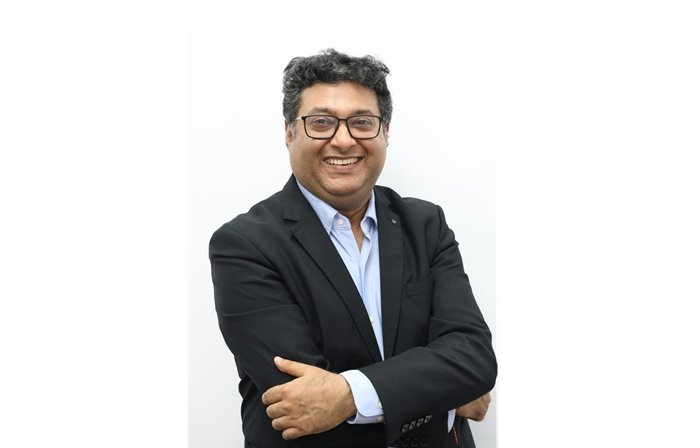
Financial literacy is increasingly finding a place in classrooms and college campuses, but the bigger challenge remains turning financial knowledge into everyday decision-making. With young Indians gaining easier access to investment platforms, digital payments and financial content online, the gap between access and understanding is becoming harder to ignore. In this interview, Himanshu Vyapak, CEO, FinX, discusses the need to make financial education more practical, the lessons from the first edition of the Financial Literacy and Mutual Fund National Olympiad (FTNMFO), and what young people should understand about risk, investing and money before they start making financial decisions of their own.
Why do you think financial literacy still isn’t treated as “core” education, the way math or science is? The government has already introduced Financial Literacy as a subject in schools — do you think this will actually benefit our generation, or is there still a gap between it being “on paper” and it actually changing how young people handle money?
I think the recognition that financial literacy needs to be introduced early is already an important step. The bigger question now is what happens inside the classroom. Money is not a subject that can be learnt effectively only by memorising definitions. A student may know what a mutual fund or a loan is, but that does not necessarily mean they understand risk, compounding, borrowing, saving or how to evaluate a financial decision. CBSE has offered Financial Literacy as a skill module for Classes VI-VIII, and its current 2026-27 framework also includes Financial Literacy as an optional skill subject at Class IX – XII.
So, I would see the policy direction as a very positive development. But the real impact will depend on how experiential the learning becomes. Students should be encouraged to work through real-life situations — how a budget works, what happens when you borrow, why an emergency fund matters, how returns are linked to risk and how to distinguish information from advice. That is also the thinking behind initiatives such as FTNMFO. We wanted students to engage with financial concepts in a setting where they had to apply what they learnt, rather than simply reproduce it in an examination. Financial literacy will become core education when it becomes a life skill, not just another chapter in a textbook.
What made FinX decide that a mutual fund olympiad was the right format to build financial awareness among students? Do you think a format like this adds value and encourages young people to start thinking about investing early, or does it risk becoming just another competition?
The idea was to make financial learning participative. When you tell a student that they have to study finance, it can immediately feel like another academic subject. When you put them in a situation where they have to understand a market concept, evaluate an investment decision or compete with peers, the same subject becomes much more engaging. That was the thinking behind FTNMFO. The first edition brought together more than 10,000 students from 400+ colleges, including strong participation from Tier-2 and Tier-3 towns. The format covered market fundamentals, mutual fund structures, asset allocation and practical investment decision-making rather than relying only on rote-based questions.
But I don’t think the success of an initiative like this should be measured by the number of students who subsequently start investing. That is not the objective. A 19-year-old does not necessarily need to become an investor simply because they have learnt about mutual funds. What we want is for students to become more informed about money. If they leave with a better understanding of risk, long-term investing and how financial products work, the initiative has done its job.
Season 2 is aiming for 50,000 students across 1,000 colleges. What did you learn from Season 1 that shaped this expansion?
The biggest learning from Season 1 was that the appetite for financial education is much wider than we initially wanted to assume. We had participation from more than 10,000 students across 400+ colleges in the first edition, with meaningful participation from Tier-2 and Tier-3 towns. That was particularly encouraging because it showed us that financial learning is not something that is relevant only to students studying finance or those in the largest metros.
The second learning was around format. Students respond differently when learning is interactive, competitive and connected to the real world. That reinforced our belief that financial education should not be delivered only through conventional classroom instruction. Season 2 is therefore about taking that learning to a much larger student base and a wider institutional network specially in Tier 2 & 3 cities. The target of 50,000 students across 1,000 colleges is ambitious, but the underlying objective remains the same — make financial concepts accessible, practical and relevant to young people. For us, scale is useful only if the quality of engagement scales with it.
When students take part in FTNMFO, what’s the one misconception about investing you see them drop first? Only about 6% of India’s population currently invests in mutual funds or equity-linked assets, compared to 62% of adults in the US — where do you think that gap really comes from?
What our initiative does is to reinforce is the difference between understanding an investment and simply knowing about it. India has made considerable progress in awareness, but participation and knowledge still have a significant gap. SEBI’s 2025 Investor Survey found that 63% of Indian households were aware of at least one securities-market product, while actual participation was only 9.5%. More importantly, only 36% of investors demonstrated moderate or high knowledge of securities markets.
So I would not look at India’s relatively lower participation only as a question of willingness to invest. There are several factors involved — income levels, risk appetite, familiarity with financial products, trust, perceived complexity and fear of losses. SEBI’s survey itself identified complexity, lack of knowledge, trust deficits and fear of financial losses among the barriers to participation. The opportunity is therefore not simply to persuade more young people to invest. It is to make sure that when they eventually participate, they understand what they are doing and why.
Gen Z and Gen Alpha have grown up around UPI, trading apps, and finfluencers online. Recent research shows Gen Z’s share of registered stock exchange investors has grown from around 20% to 40% in just five years, with the median investor age dropping from 38 to 33. Does that shift reflect real financial awareness, or just easier access and more exposure?
It is probably a combination of both, and I would not equate participation with financial awareness. Technology has fundamentally reduced the friction involved in entering financial markets. A young person today can open an account, access information and start investing from a mobile phone. That is a major change from the experience of previous generations. But ease of access can solve an access problem without necessarily solving an understanding problem.
SEBI’s 2025 Investor Survey provides an interesting counterpoint. Despite growing awareness and participation, only 36% of investors surveyed had moderate or high knowledge of securities markets. The survey also found that 79% of Gen-Z households displayed risk-averse behaviour. So I see the younger investor becoming more digitally enabled, but that does not automatically mean they are financially sophisticated. The next stage is to convert digital access into informed participation. That is where education has to catch up with technology.
How do you make sure an initiative like this builds real understanding, and not just quiz-solving skills for a competition? One study also found that almost 80% of households, including Gen Z households, said they’d rather preserve capital than chase higher returns — yet anecdotally, a lot of young investors are still drawn to high-risk, high-volatility instruments. Where’s that disconnect coming from?
The design of the Olympiad is important here. We deliberately moved beyond a format where students simply memorise facts. The first edition tested market fundamentals, mutual fund structures, AIFS, ETFs, asset allocation and practical investment decision-making through multiple competitive and interactive rounds. National Competition also encourage students put additional efforts and usually tend to bring out the best
But I would also separate risk appetite from financial literacy. Someone choosing a high-risk investment is not necessarily financially illiterate; the more important question is whether they understand the risk they are taking and whether it is appropriate for their circumstances. The SEBI survey actually gives us an interesting picture. Nearly 80% of Indian households prioritise capital preservation over higher returns, and 79% of Gen-Z households display similar risk-averse behaviour. At the same time, the survey identifies fear of losses, lack of knowledge and complexity as important barriers to market participation.
So the apparent contradiction may be less about young people being uniformly risk-seeking and more about the fact that financial behaviour is influenced by different things — social media, peer behaviour, market cycles, personal circumstances and the way financial information is presented. Our role in education is not to tell students to take more risk. It is to help them understand what risk means before they take it.
With Franklin Templeton as Title Sponsor and Groww as the Knowledge Partner, how do you divide the “content” side from the “access” side of financial learning?
We see the partnerships as complementary rather than as two completely separate functions. The educational content has to be credible, structured and relevant to how financial markets actually work. At the same time, students also need access to contemporary ways of learning and engaging with financial information.
FinX’s role is to bring these pieces together and create the learning architecture around the Olympiad. The objective is not to turn the programme into a product-led exercise, but to create an environment where students can understand concepts, test their knowledge and engage with the broader financial ecosystem. That distinction is important for us. Financial education should create informed participants, not product consumers. Industry participation adds credibility to such initiatives by helping curriculum & financial learning more practical & aligned to ground. It also offers Industry, a platform to engage with both students and the academia
Do you think mobile apps and digital platforms are actually making young Indians better with money, or just better at using investment apps? Data shows over 75% of new sign-ups on trading and investment apps now come from the 18-30 age group — does that scale of participation worry you at all, or does it feel like a healthy trend?
The technology itself is neither positive nor negative. What matters is what the user understands when they use it. Digital platforms have unquestionably made financial products more accessible. That is a positive development because accessibility is one of the barriers that historically limited participation. But an easier interface should not be mistaken for easier financial decision-making.
The SEBI Investor Survey found that social media, mobile apps and digital advertising are among the preferred channels for financial education, particularly among younger audiences. It also found that Gen Z shows a preference for short-form videos and reels for financial learning. So I would not be worried about young people using investment apps simply because they are young. I would be more concerned if participation is happening without an understanding of risk, costs, diversification or the nature of the product. The real measure of progress is not how many people download an investment app. It is how many people can make a reasoned financial decision after using it.
Colleges seem increasingly open to hosting financial literacy programmes now. What changed — was it student demand, institutional interest, or something else?
I think it is a combination, but the changing financial environment has certainly made the subject harder for institutions to ignore. Students are already encountering financial information every day — through UPI, social media, investment platforms and digital content. Colleges therefore increasingly recognise that financial awareness is relevant to students irrespective of whether they are studying finance. Our experience with FTNMFO supports that. The first edition reached students across 400+ colleges and saw strong participation from Tier-2 and Tier-3 towns.
There is also a growing recognition that employability is not only about technical or professional skills. Financial awareness is part of becoming an independent adult and, for students entering BFSI, it is directly connected to understanding the industry they may eventually work in. What is changing is that financial education is increasingly being seen as something that belongs alongside academic and career education, rather than outside it.
What’s a financial habit you wish every college student picked up before they get their first salary?
I would say: learn to pay yourself first before you start spending. It does not have to be a large amount. The habit matters more than the amount. Once a young person starts earning, it is very easy for lifestyle expenses to expand along with income. Building a habit of setting aside money first — for an emergency fund, a financial goal or long-term investing — creates discipline early. I would also add one more habit: before buying any financial product, understand what you are buying and what risks come with it. Your first salary is not just the beginning of earning money. It is the beginning of making financial decisions independently.
How do you see the gap between financially literate students and those who aren’t playing out ten years from now — especially with Millennials and Gen Z together already accounting for nearly half of India’s mutual fund assets?
The gap is likely to become more visible as financial participation increases. The important point is that financial literacy is not simply about accumulating more money. It affects the quality of financial decisions — how people manage debt, assess risk, plan for goals, respond to market volatility and evaluate financial information. There is already evidence that awareness and participation are moving at different speeds. SEBI’s 2025 survey found that 63% of households were aware of at least one securities-market product, but only 9.5% actually participated, while only 36% of investors demonstrated moderate or high market knowledge.
At the same time, younger generations are becoming an increasingly important part of the investment ecosystem. Recent industry analysis estimates that Millennials and Gen Z together account for about 48% of mutual fund assets, while investors below 35 accounted for around 40% of new SIP accounts in 2025. The implication is that financial capability will increasingly become a differentiator. People who understand financial products and risk early are likely to be better positioned to make informed decisions as their incomes, responsibilities and financial commitments grow. That is why we see financial literacy as a long-term capability, rather than a one-time awareness exercise.
If a student walks away from FTNMFO with just one lesson about money, what do you hope that lesson is?
Don’t invest in something you don’t understand. For me, that captures the larger purpose of FTNMFO. We don’t want students to come away believing that financial success is about finding the next high-return investment. We want them to understand that good financial decisions start with knowledge — knowing the product, understanding the risk, having a time horizon and being clear about what you are trying to achieve.
The first edition of FTNMFO was built around taking financial concepts out of textbooks and putting them into a practical, decision-making environment. If a student leaves the Olympiad with the habit of asking “Do I understand this well enough to make a decision?” before putting their money into something, then I think we have achieved something much more valuable than simply conducting a competition.