

From Fragmented to Unified: Connecting India’s Classrooms

Share
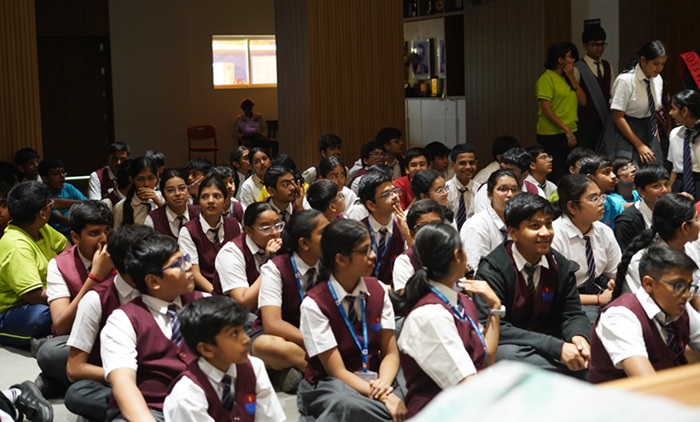
The education system in India ranks amongst the biggest in the world with over 25 crore school-going students across over 14 lakh schools. However, the very nature of scale brings fragmentation into the picture. The accessibility of quality digital learning would largely depend on the location, the infrastructure of the school, connectivity, and teachers’ availability. Consequently, the next stage of education technology would not just be to put a screen in every classroom but to build an integrated ecosystem for the learner, the teacher, the parents, institutions, content, and data.
India already has laid the foundation for this shift. The NEP 2020 gives central importance to technology in improving access, equity, and quality of education. DIKSHA, PM e-Vidya, and SWAYAM programs are some of the many efforts by India towards making the journey digital through education. As of March 2026, DIKSHA has crossed two crore users. However, what we need is an effort to take our ambitions from digitisation to integration.
Connecting classrooms with the last mile
The first step towards a connected classroom is having proper infrastructure. As per UDISE+ 2024-25 data, the percentage of schools having internet facility increased from 53.9% in 2023-24 to 63.5% in 2024-25. Computer facilities have also increased from 57.2% to 64.7%.
The gain is impressive but the extent of the gap remains daunting. A classroom cannot be said to be completely connected where students cannot access online content regularly.
Just as important is the inclusion of parents in the digital ecosystem. There should be an effort by schools to enlighten the parents on the systems and procedures so that they can appreciate how digital technologies can make communication easier and less cumbersome for them as they get to know more about the learning process of their children.
Investing in broadband, Wi-Fi, devices, power, network, and technical infrastructure continues to be imperative, especially for underprivileged and rural areas. On the other hand, connected education must not depend on the premise that all learners would always have high-speed internet or devices.
The approach adopted by India should be considered important here. PM e-Vidya combines digital, television, radio, and other methods to enable learning that goes beyond internet-based learning. This way, the classroom of the future needs to be both device agnostic and connectivity robust.
From educational content to the ecosystem of learning
Education content is not scarce in India. The real challenge is to ensure that the content is discoverable, interoperable, and relevant to the learners.
DIKSHA is one such example. As a digital infrastructure designed to serve the needs of school education in India, DIKSHA offers curriculum-aligned content in multiple languages and levels while allowing states, education boards, and institutions to participate.
The next big thing will be to bring together all of these platforms and integrate them within the classroom environment.
Consider how a learner might access the book via a QR code, do a digital exercise, get personalized content and help the teacher understand where the learner may need extra support. The process can even continue at home through mobile phones, TV, and other means of access. This is very different from just scanning a textbook in a PDF file.
Empower teachers, don’t replace them
While technology can help to link resources, teachers will always play a vital role in bridging the gap between content and learning. In a connected education approach, teachers must have access to professional development opportunities, classroom resources, assessment tools and student progress data. The NEP 2020 clearly mentions technology-enabled development of teachers and inter-operability of platforms like DIKSHA and SWAYAM.
This is especially because digital transformation will end up increasing teachers’ workload otherwise. These platforms must make it easier for teachers to teach rather than adding an administrative burden.
A better teacher ecosystem will enable teachers to exchange lesson plans, find multilingual resources, collaborate across geographies and analyse learning data to reach out to students that need more attention. Thus, the objective must not be of making classrooms technology-led, but teacher-led classrooms enabled by technology.
Data integration to link campuses together
What is often lacking in many educational systems is not content or connectivity but the capability to transform data into action. UDISE+ already offers an infrastructure of data at the national level, spanning schools, students and teachers. It facilitates the process of moving information through schools to blocks, districts and states, thereby laying the groundwork for making decisions based on evidence. The task now is to work on this framework while ensuring robust protection of student data.
When used responsibly, education data can enable administrators to pinpoint areas in which infrastructure needs improvement, track attendance and transitions, assess learning trends and deploy resources to those schools in most need. Various government initiatives like Samagra Shiksha, STARS and PM SHRI already rely on UDISE+ data to determine the needs of infrastructure, including ICT and digital classrooms. It is time to create a system where all schools are connected in a wider network of learning.
Building for inclusion from the beginning
For connected education to become a reality, it needs to be built inclusively from the start.
Given the diversity of India, there cannot be a single technological solution for the entire country. Education content must be in Indian languages and made accessible for people with disabilities. Technology solutions must cater to low bandwidths, while the platform itself should have user-friendly interface for varying levels of digital literacy.
The combination of digital, TV, radio and accessible content provided by PM e-Vidya is an example of how various channels can reinforce one another. It seems pretty clear that technology should solve problems, not create them.
From connected classrooms to a connected education system
India has moved a long way from the idea that education technology was all about smart boards and online classes. The next step is to achieve interoperability between all of the existing technologies. A connected education system would mean connections between learners and content, teachers and professional development, classrooms and campuses, schools and decision makers, and education data and better decisions.
Such a system would require an ecosystem approach to connectivity, rather than a hardware project approach. The blueprint of India’s connected classrooms may still have a teacher, a blackboard and a textbook; what changes is a connected network that allows knowledge and expertise portable beyond the classroom walls.
VIews are personal
The author is the Vice Chairman of Silverline Prestige School-one of Ghaziabad’s leading skill-ready schools