

Indo-Albanian Quiz Brings Focus on Student Exchange

Share
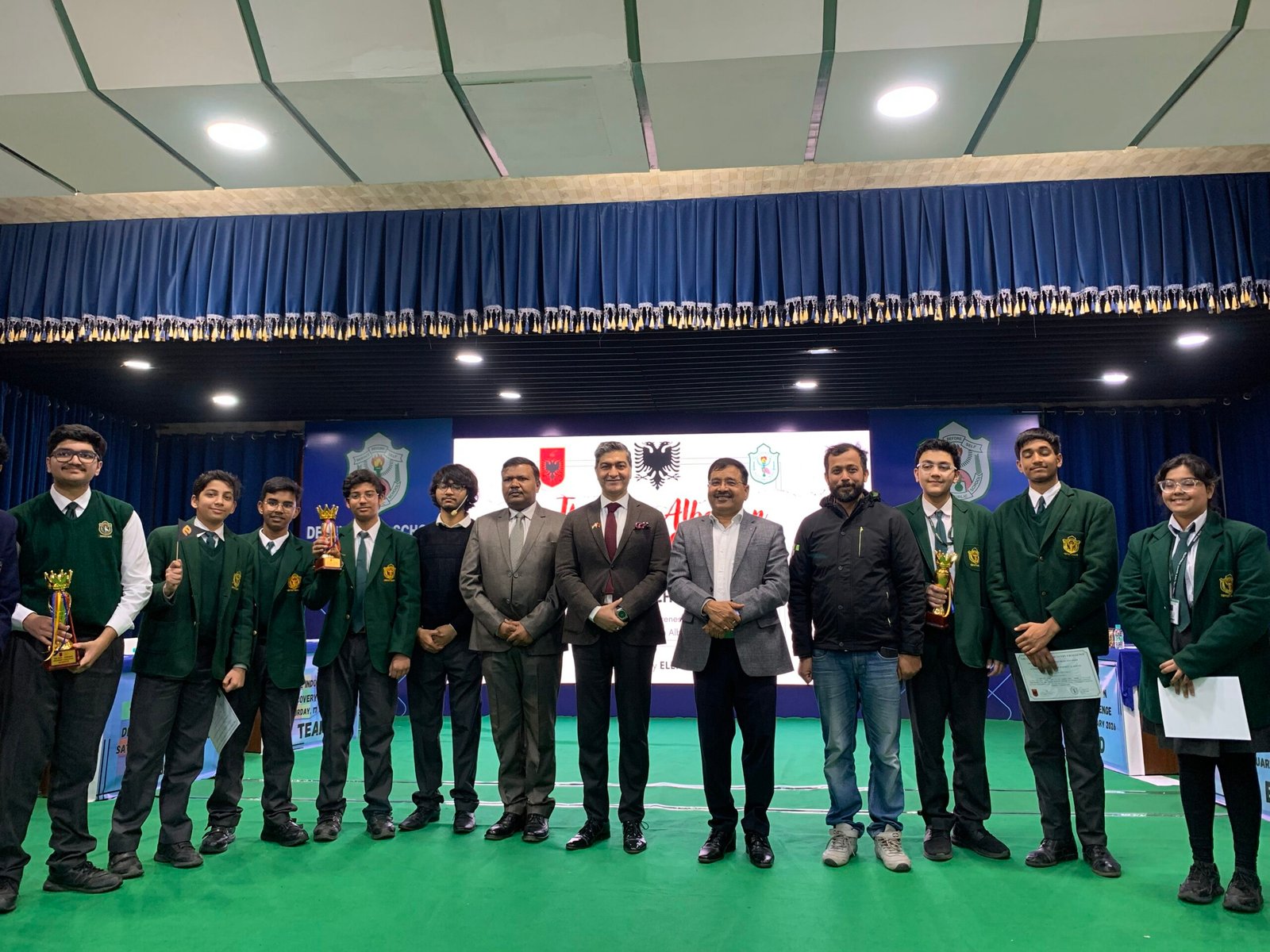
New Delhi : The Indo-Albanian Discovery Challenge, an inter-school quiz program hosted at Delhi Public School (DPS), Mathura Road, brought together scholars, preceptors, and political representatives to bandy the part of education and artistic mindfulness in transnational engagement. The event was concertedly organized by the Honorary Consulate of the Republic of Albania in India and DPS Mathura Road.
Further than 200 scholars from over 30 seminaries across Delhi shared in the quiz, which concentrated on Albania’s history, culture, governance, and transnational outlook. According to the organizers, the action was designed to introduce scholars to lesser-known countries and encourage literacy beyond the conventional academy syllabus, particularly in the area of global affairs.
The quiz format combined competition with academic literacy and was aimed at assessing scholars’ general mindfulness while promoting curiosity about transnational societies. Preceptors accompanying scholars said similar conditioning helps produce interest in world affairs at an early stage, though they noted that sustained literacy requires continued academic engagement beyond one-time events.
Speaking at the program, Dr. Ram Singh, star of DPS Mathura Road, said seminaries play an important part in preparing scholars for a globalized terrain. He observed that exposure to transnational themes allows scholars to develop broader perspectives and understand artistic diversity. He added that co-curricular enterprise can round out formal education when aligned with academic objects.
The event was attended by Mr. Dikshu C. Kukreja, Honorary Consul General of the Republic of Albania to India, who interacted with scholars and faculty members during the program. Addressing the gathering, Mr. Kukreja spoke about the applicability of people-to-people contact in transnational relations, particularly through education and artistic exchange. He noted that similar engagement helps foster mindfulness and understanding, especially among youthful people.
During his commerce, Mr. Kukreja pertained to literal connections between India and Albania, including the heritage of Mother Teresa, who was of Albanian origin and spent an important part of her life working in India. He said participated literal references frequently serve as points of artistic connection between countries and are constantly stressed in political and educational exchanges.
Conversations held alongside the quiz touched upon the possibility of unborn cooperation in the education sector. Organizers indicated that ideas similar to pupil exchange programs, faculty exchanges, and academic collaborations between institutions in India and Albania have been bandied about at an exploratory position. Still, officers clarified that any similar enterprise would bear formal memoranda of understanding (MoUs), institutional commitment, and nonsupervisory blessings before being enforced.
Albania’s demographic profile and education geography were also substantiated during the conversations. With a population of roughly 2.5 million and a significant diaspora, Albania has concentrated on education as part of its broader development strategy. Actors noted that collaboration with Indian institutions could offer academic exposure, though differences in education systems, delegation processes, and policy fabrics would need to be addressed.
Cultural exchange surfaced as another area of engagement bandied at the event. Mr. Kukreja appertained to recent artistic programs organized in Albania, including a Festival of India that showcased Indian artistic rudiments similar to armature, cookery, and performing trades. He said similar enterprises contribute to artistic familiarity but are most effective when rounded by structured educational and institutional cooperation.
Technology and invention were mentioned as implicit areas for unborn commerce. Speakers noted that both India and Albania have experienced profitable and political transitions since the early 1990s and are presently focusing on growth, employment, and arising sectors. Albania’s interest in developing areas similar to technology and artificial intelligence was stressed, alongside India’s experience in these fields. Still, it was emphasized that any collaboration would depend on policy alignment, institutional readiness, and collective interest.
Scholars sharing in the quiz described the event as instructional and engaging, stating that it handed them an occasion to learn about a country they were preliminarily strange with. Preceptors accompanying the scholars noted that while similar enterprises are useful for mindfulness structure, long-term impact depends on harmonious exposure to global studies within the academy class.
DPS Mathura Road stated that hosting transnational-themed academic events aligns with its focus on holistic education. School officers said that the institution aims to give scholars openings that combine academic literacy with global exposure while remaining aligned with educational objects.
The Honorary Consulate of the Republic of Albania in India reiterated that educational outreach and artistic engagement are among several tools used to support bilateral relations. Officers noted that while events similar to quizzes and artistic programs help induce interest, sustained cooperation requires institutional fabrics and long-term planning.
The Indo-Albanian Discovery Challenge concluded with pupil relations and a brief feedback session. Spectators noted that the event reflected growing interest in transnational mindfulness among scholars while also pressing the significance of structured follow-up through academic hookups and formal agreements.
Overall, the program underlined how pupil-position engagement can round formal politic sweats while pointing to the need for easily defined institutional mechanisms to translate dialogue into sustained educational cooperation.