


“Prevention Is Not an Alternative to Treatment; Both Are Essential”

Share
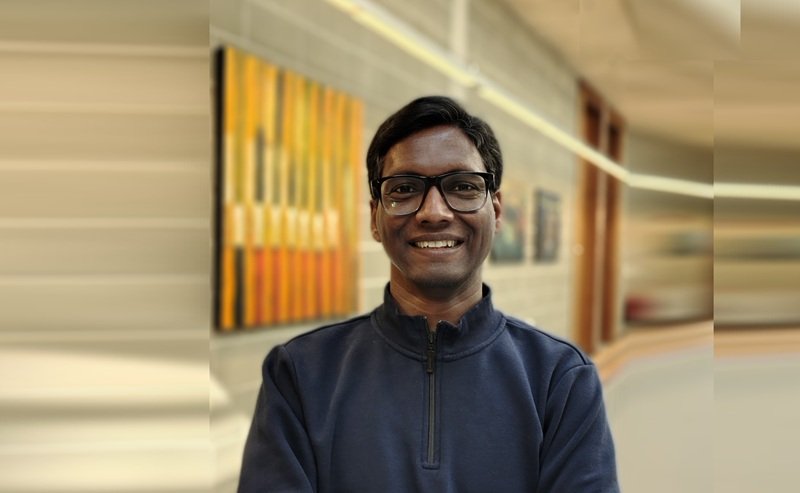
Public health is no longer only about treating illness after it occurs. Prevention, climate change, health equity, technology and community participation are becoming equally important to building healthier societies. In this conversation, Dr Vikram Niranjan, Associate Professor in Public Health at the School of Medicine, University of Limerick, discusses why healthcare systems need to focus more on prevention, how climate change is creating new health risks, the growing role of AI in healthcare and why oral health must be treated as part of overall health. He also shares his views on making health technology more inclusive and preparing the next generation of public health professionals.
You trained as a dentist before becoming a public health researcher — what made you switch paths?
My training as a dentist gave me the opportunity to improve people’s health and confidence, often one patient at a time. However, while working in clinical practice, I began to recognise that many oral-health problems were shaped by wider influences, including education, income, living conditions, access to care and health behaviours. I became increasingly interested in understanding these broader determinants of health and in exploring how we could prevent illness across entire communities, rather than treating problems only after they had developed. That curiosity led me to public health. I also realised that public health extends far beyond health-awareness campaigns or screening camps. It involves research, policy, prevention, health promotion, equity and the design of healthier environments. Dentistry gave me a strong clinical foundation; public health allowed me to apply that perspective at population level.
Having worked in India, the UK, and Ireland, what’s one big difference you’ve noticed in how these countries approach public health?
Having worked in India, the UK and Ireland, I have noticed that each country approaches public health within its demographic, social and health-system context. The UK and Ireland have well-established public-health structures, long-standing surveillance systems and strong links between research, policy and service planning. India, meanwhile, has the enormous challenge—and considerable experience—of delivering health services to a very large and diverse population, often through innovative community-based programmes. I would not describe one system as simply better than another; each offers valuable lessons. For example, India’s experience with large-scale immunisation, community health workers and digital health initiatives can offer important insights for other countries. At the same time, further strengthening locally relevant research and the translation of evidence into policy can support continued improvements in health equity and service delivery.
Why do you think we still wait for people to get sick instead of investing more in prevention?
One reason is that healthcare systems have historically been organised around diagnosing and treating people who are already ill. Treatment is visible and immediate, whereas prevention often produces benefits gradually and may be less noticeable when it succeeds. Prevention also requires coordination across health services, schools, workplaces, communities, housing, transport and the environment. That can make its benefits more difficult to attribute to one organisation or funding programme. Nevertheless, prevention is not an alternative to high-quality treatment; both are essential. Evidence shows that health promotion, disease prevention and strong primary healthcare can improve health outcomes, increase efficiency and reduce avoidable pressure on hospitals. WHO describes primary healthcare as an inclusive, equitable and cost-effective approach to improving health and wellbeing. Investing earlier can protect lives, reduce suffering and allow healthcare professionals and resources to be used more effectively.
What’s a lesson from recent disease outbreaks that you wish more countries had actually learned?
The major lesson from COVID-19 is that preparedness must begin long before an outbreak occurs. We do not need to live in fear of every emerging infection, but we do need strong systems that can identify risks early and respond proportionately. Individuals can contribute by following reliable public-health advice, practising good hygiene, staying home when unwell where possible, and seeking appropriate care rather than relying on unverified information. Healthcare professionals need continuing training, clear communication skills, effective infection-prevention practices and support to protect their own wellbeing. At country level, preparedness means investing in primary healthcare, laboratories, surveillance, trained personnel, emergency supplies and transparent risk communication. It also means collaboration between human, animal and environmental health sectors—the One Health approach. COVID-19 showed us that preparedness is a continuous responsibility, not an emergency activity switched on only during a crisis. My recent advice for Hanta Virus outbreak was the same, we have learnt our lessons to keep ourselves safe, so why forget that!
How worried should we be about climate change affecting our health — beyond just heatwaves?
Climate change is real, and the effects are well beyond heatwaves. It can affect air quality, food systems, water safety, mental health, injury risk, infectious diseases and the ability of health services to function during emergencies. Climate-sensitive infections may change their geographical distribution, while floods, storms and droughts can disrupt homes, livelihoods and access to care. Air pollution is also an important concern, both outdoors and indoors, particularly for children, older adults and people living with chronic disease. These impacts are not distributed equally: communities with fewer resources often have less capacity to adapt. At our medical school, we have established a Climate, Health and Sustainability initiative, which I co-chair, and we are strengthening climate-health education for medical and public-health students. Preparing future professionals to recognise and respond to these risks is now an essential part of healthcare education.
Most people don’t think of oral health as “real” health — why is that such a dangerous assumption?
Oral health is an integral part of general health, not a separate or optional concern. The mouth affects eating, speaking, sleeping, social interaction and overall quality of life. Oral conditions can also reflect wider health risks and share common determinants with other noncommunicable diseases, including tobacco use, alcohol consumption and diets high in free sugars. The relationship with diabetes is particularly important: diabetes and periodontal disease can influence one another, although this does not mean that every person with gum disease will develop diabetes. One reason oral health is sometimes neglected is that people often seek dental care only when they experience pain. By then, disease may be more advanced and treatment more complex and costly. Regular preventive care, daily oral hygiene, sensible dietary choices and timely professional advice can reduce avoidable disease and support health throughout the life course.
Is there a real link between something like gum disease and conditions like diabetes or heart disease?
There is a genuine scientific association between periodontal disease, commonly called gum disease, and conditions such as diabetes and cardiovascular disease. However, it is important to explain that association carefully. These conditions have multiple causes and risk factors, including genetics, age, smoking, diet, obesity, blood pressure, social circumstances and access to healthcare. We therefore cannot say that gum disease alone causes diabetes or heart disease. Diabetes has a particularly well-recognised two-way relationship with periodontal disease: poorly controlled diabetes can increase susceptibility to gum disease, while significant periodontal inflammation may make blood-glucose control more difficult. Research is continuing to clarify the mechanisms and the extent of these relationships. The practical message is straightforward: preventing and treating gum disease is worthwhile in its own right, and people with diabetes or cardiovascular risk should discuss oral health with their healthcare and dental professionals.
Where do you see AI actually helping in healthcare, and where do you think it’s overhyped?
AI can be a valuable tool in healthcare when it is used carefully, transparently and under appropriate human oversight. In clinical settings, it may support image analysis, screening, documentation, decision support and the identification of patterns that deserve professional attention. In public health and research, AI can help organise large datasets, identify trends, support disease surveillance, assist with forecasting and accelerate parts of the evidence-synthesis process. These applications may help professionals make more timely and informed decisions, but AI should support—not replace—clinical judgement, public-health expertise or meaningful engagement with communities. It is overhyped when it is presented as infallible, automatically objective or capable of solving problems without reliable data and human accountability. Important concerns include privacy, bias, transparency, unequal access and the performance of systems in populations that are poorly represented in the training data.
As health tech advances, how do we make sure it doesn’t leave poorer or rural communities behind?
Health technology should advance the UN Sustainable Development Goals, particularly the commitments to reduce inequalities, improve health and ensure that no community is left behind. We at the University of Limerick follow SDGs in our education and research, as we are aware our actions would have direct and indirect impacts on achieving those at various levels. This requires more than providing people with an app or a digital device. We must consider internet access, affordability, language, disability, digital skills, trust and the realities of rural and underserved communities. Health literacy is central to this process. It means helping people find, understand, evaluate and use health information so that they can make informed decisions and participate confidently in their care.
Communities should be involved from the beginning of research and technology development, not consulted only after a system has been designed. We have a WHO collaborating centre at the School of Medicine, UL which encourages participatory health research i.e., involving people in the research process and also in health decision making. Inclusive research with rural and hard-to-reach populations can bring forward experiences that might otherwise remain invisible. Co-design, accessible communication, offline alternatives and monitoring for unequal outcomes can help ensure that innovation improves health equity rather than widening existing gaps.
- What’s missing from how universities currently train the next generation of public health professionals?
I suppose, universities are training public-health professionals well in many respects, but education must continue to evolve with changing health challenges. At our MPH programme, School of Medicine, UL, a dedicated practicum enables students to work with healthcare organisations and other relevant partners, giving them experience of applying public-health concepts in real-world settings. This helps connect academic learning with service delivery, policy and community needs. Students also need strong skills in critical appraisal, data interpretation, communication, teamwork, ethics and engagement with diverse populations. The responsible use of AI is now an important part of academic and professional development. Students should learn how to use AI as an aid while verifying information, protecting confidentiality, acknowledging its use and retaining responsibility for their work. Excessive dependence on automated tools can weaken critical and analytical thinking. The strongest research ideas still emerge from curiosity, discussion, reflection and human creativity.
- You’ve collaborated with researchers in over 35 countries — what excites you most about India and Ireland working together on health research?
India and Ireland have an exciting opportunity to work together because they bring different experiences to many of the same public-health challenges. I see this collaboration like combining two lenses: one offers insights from a large, diverse and rapidly changing population, while the other contributes experience from a smaller health system with strong links between research, policy and practice. When these perspectives are brought together, they can produce a clearer and more complete understanding of health problems.
There is significant scope for joint work in climate and health, health equity, infectious diseases, noncommunicable diseases, oral health, digital health and health-professions education. The aim should not be to copy one country’s approach in the other but to learn, adapt and develop solutions that are appropriate to local communities. Research partnerships between India and Ireland can therefore generate knowledge that is both locally meaningful and internationally valuable.
- If you had to give one piece of advice to a young person in India thinking about a career in public health, what would it be?
My advice would be to remain curious, patient and persistent. Public health is a field in which meaningful change often takes time, because it involves evidence, communities, institutions and policy. Develop the ability to think analytically and critically: ask good questions, examine the quality of evidence, recognise uncertainty and listen carefully to people whose experiences may differ from your own. Alongside subject knowledge, build practical competencies in research methods, data analysis, communication, teamwork, ethics, policy and community engagement. This is where we put emphasis in our MPH course at the School of Medicine, UL – we shape minds, build curiosity and help develop competencies! These skills are useful across academic, government, clinical, non-governmental and international settings. I would also encourage young professionals to seek mentors, gain experience beyond the classroom and learn to communicate evidence clearly to both technical and general audiences. If you have a curious mind, care about fairness and want to improve health at population level, public health needs your perspective and commitment.