

“In A World Of AI, Students Must Learn How To Think”

Share
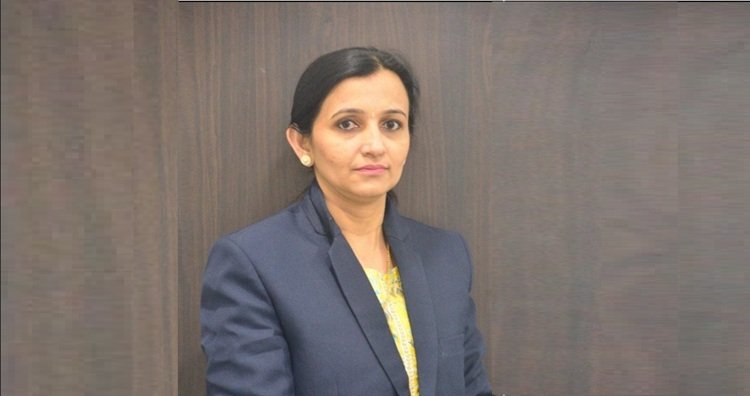
As artificial intelligence changes the way students learn, schools are also rethinking what education should prepare children for. Beyond marks and memorising answers, there is a growing focus on critical thinking, emotional skills and learning at a child’s own pace. In this conversation, Preethi Rajeev Nair, Principal at Lancers Army Schools, Surat, shares her views on using AI in classrooms, the pressure around exams and why schools need to give students more time to think, explore and learn from mistakes.
1. As a Principal, how have you seen AI actually change what happens inside classrooms over the last couple of years?
AI has turned classrooms into lively, interactive spaces. Instead of a single lecture for everyone, teachers use AI to tailor lessons to different learning paces and provide instant feedback. Students spend far less time simply memorising facts. Instead, they learn to become inquisitive and ask better questions, check information critically, and use digital tools to solve real-world problems creatively.
2. Do you see AI more as a helpful teaching partner, or is it something schools still need to be cautious about?
It is definitely both. As a partner, AI handles repetitive paperwork and lesson planning, giving teachers more time to mentor and connect with students emotionally. However, schools must stay cautious. We have to guide students so they do not use AI as a shortcut to avoid critical thinking, but rather as a tool that sharpens their own reasoning.
3. Parents today have very clear ideas about what they want for their child. How do you balance that with what a child actually needs at their own pace?
We balance this through open, honest conversations with parents. Instead of comparing children to external scoreboards, we show parents their child’s personal growth and emotional readiness. Pushing a child too fast often causes early stress and burnout. Helping parents see that steady, unhurried learning builds true confidence which makes all the difference.
4. What’s a conversation you often have with parents that you wish happened more, or happened earlier?
It’s important to talk to parents about letting children experience small failures. Parents naturally want to protect their kids from disappointment or low marks. But learning to handle mistakes early teaches children resilience, problem-solving, and emotional strength. Experiencing setbacks in a safe environment prepares them for real-life challenges much better than constant protection does.
5. Why do you think holistic learning still takes a backseat to marks and academics in so many schools?
Because marks are easy to measure, rank, and compare, while character, empathy, and creativity are not. College admissions and societal expectations still focus heavily on exam scores. As long as high test scores remain the main gateway to future opportunities, this pressures schools and parents to continue prioritising academic marks over all-round personality development.
6. What does “holistic development” actually look like in a school’s daily routine, beyond just extracurricular activities on a timetable?
It shows up in everyday interactions: morning check-ins where students share feelings, group projects that teach teamwork, and quiet time for reflection. This is possible when teachers help children resolve playground disagreements peacefully as well as maturely and when emotional well-being and kindness are valued and encouraged just as much as good grades on a report card.
7. You’ve spoken about a mindset shift needed in school education for 2026. What’s the one shift you think matters most right now?
The biggest shift is moving from memorising answers to learning how to think. In a world where answers are available at the click of a button online, simply knowing facts and information is no longer enough. Students must learn how to filter good information from bad, ask thoughtful questions, adapt to new situations, and make sensible, ethical decisions.
8. Is this shift more about how teachers teach, how parents think, or how the system itself is built?
It starts with the system and how exams are built. Teachers naturally push more toward teaching for exams, and parents focus on whatever the system rewards. Once our board exams and grading systems start testing real understanding, creativity, and practical problem-solving instead of memorised answers, both classroom teaching and parental attitudes will quickly follow.
9. Beyond academics, what skills do you think students genuinely need for the world they’re going to step into?
Students need emotional balance, adaptability, clear communication, and the ability to explore and learn new things on their own. They must know how to work well with diverse groups of people, handle stress in a fast-paced digital world, and make responsible choices. These life skills matter far more for long-term success than textbook recall.
10. You’ve talked about moving from speed to depth in education. What made you feel speed had become a problem in the first place?
Rushing through heavy textbooks and chasing to complete the syllabus is just surface-level learning. Students could memorise definitions to pass a test on Friday, but by Monday they had forgotten the concept or could not apply it to real life. This race against the clock caused unnecessary stress and killed curiosity. True understanding needs time, practice, and room to explore and ask questions.
11. What would a school day look like if it were designed around depth of learning rather than covering the syllabus fast?
It would have fewer, longer classes instead of short, rushed periods. Mornings could focus on hands-on science experiments, group discussions, and writing projects. Afternoons could be set aside for self-paced study, creative work, and one-on-one time with teachers to clear doubts. Learning would feel focused, calm, and meaningful rather than like a daily sprint.
12. If you could change just one thing about how Indian schools approach education today, what would it be?
I would shift our focus away from stressful, high-stakes final exams. Instead, I would assess students through year-round projects, practical presentations, and real-world assignments. When children are not terrified of a single test deciding their entire future, learning becomes joyful, creative, and genuinely useful for life.