

‘Women Are Often Over-mentored and Under-sponsored’: ISDM’s Kakul Misra

Share
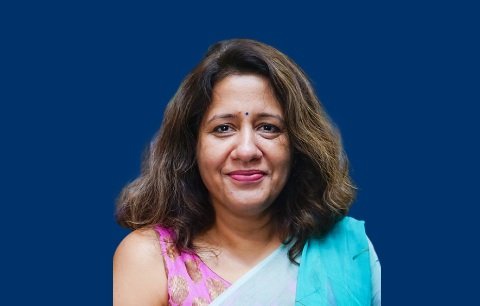
Women are entering higher education and the workforce in growing numbers, yet far fewer make it into management positions or boardrooms. For many, the difficulty is not finding a job but building a career that survives family responsibilities, workplace bias and the lack of opportunities to move up.
Kakul Misra, Director at the India School of Development Management (ISDM), believes the problem begins much earlier than the much-discussed glass ceiling. Women often miss out on their first promotion, receive fewer opportunities to lead important projects and struggle to return to work after career breaks. Even in the social sector, where women make up a substantial share of the workforce, leadership positions remain largely occupied by men.
Misra also questions whether organisations are doing enough beyond meeting diversity targets. While women’s representation on Indian boards has increased from around 5 per cent in 2014 to about 21 per cent today, she argues that having a seat at the table does not necessarily mean having a say in decisions.
In an interview with EduKida, Misra discusses why qualified women continue to be overlooked for leadership roles, the challenges of moving from education to employment, the importance of sponsorship over mentorship, and how organisations can make career breaks and returning to work less difficult. She also explains why the development sector could offer women stronger career opportunities and what needs to change to help more women move into leadership and governance roles.
Women hold a growing share of board seats in India, partly due to regulatory mandates. But numbers alone don’t guarantee influence. What does it really take to move from token representation to women having a real voice in decision-making?
Women’s representation on Indian boards has grown from around 5% in 2014 to about 21% today, largely because of regulatory mandates. That is real progress, but the question I keep coming back to is whether presence has grown faster than power — the power to take decisions, or at least to shape them. We have all seen versions of token representation, whether it is the ‘sleeping’ board member or the shadow panchayat member whose husband actually runs the show. Moving from a seat at the table to a voice at the table needs three shifts.
The first is intention. Organisations have to fill board seats with women because of the skills, perspectives and experience they bring, not simply to comply. Too many appointments are still made to tick a box, sometimes drawing from the promoter’s family or circle of friends. I would like to see boards recruit women for specific capabilities — finance, risk, technology, people, communications — and be clear about why each director is there.
The second is preparation. A strong executive is not automatically ready to be a director. Governance, fiduciary duty, reading financials and navigating board dynamics are all learnable skills, and that gap is exactly what we designed ISDM’s Women on Boards programme around, together with Governance Counts. We prepare senior women leaders from the corporate sector to serve on social sector boards, and then match them with organisations where they can offer strategic guidance. In my experience, preparation combined with placement is what turns intent into impact.
The third shift is in the boards themselves. Boards need to genuinely welcome new women members, and real voice depends on culture: who sits on the key committees, who chairs them, and whether the chair actively draws out every view in the room. I would encourage boards to track who leads committees and who speaks, not only who sits at the table.
Representation opens the door. Preparation, placement and board culture decide whether women actually shape decisions once they are inside.
Many organizations say they can’t find qualified women for boards. What should companies, non-profits and institutions do differently to build and identify this talent pipeline?
I don’t believe there is a shortage of talent. The problem is usually where organisations look and how narrowly they define a ‘qualified’ board member. Most boards still recruit through personal networks and look for one familiar profile, typically a former CXO. That shrinks the pool from the very start and keeps returning the same few names. Egon Zehnder’s India data shows more women than men serving on multiple boards, which tells that companies need to look much wider for new women directors.
There are a few things I would urge organisations to do differently. Begin by defining what the board actually needs before the search starts. Board composition should flow from the organisation’s mission and stage, so start with a skills matrix covering areas such as technology, risk, HR, consumer insight, sustainability or the social sector. Senior women leading these functions are often a far closer fit for what a board needs than a generic ‘ex-CXO’ requirement, and it is worth exploring adjacent profiles too.
Next, move beyond personal networks. Structured search, director databases, professional bodies and dedicated programmes all widen the field.
Nonprofit boards can also be a powerful training ground. Nonprofits need strategic, financial and governance expertise, and corporate women gain direct board experience in return. Through our Women on Boards programme, we match participants with social sector organisations where they join as advisory board members, creating a pipeline that benefits both sides.
Finally, build the pipeline from within. Give senior women early exposure to the board — presenting to it, sitting in on committees, and being sponsored by current directors. We need to invest in readiness, not just recruitment, because many accomplished women have simply never been given a route into the boardroom.
So the real question is not whether qualified women exist. It is whether organisations are willing to change how they search, prepare and select.
India has seen rising female enrolment in higher education, yet female labour force participation remains low. Where is the gap between a woman’s degree and her paycheck, and what can education and skilling do to close it?
Women in India now outpace men in higher education enrolment, yet only about 40% participate in the labour force, and fewer still hold salaried jobs. When I look at where the gap opens up, I see three distinct points: moving from a degree to a first job, staying in work, and growing in work. Skilling has to address all three.
The first gap is between the degree and the first job. Many degrees are not connected to what employers need, and young women often lack practical skills, internships, networks and career guidance. Concerns about safety, mobility and family expectations narrow their choices further. A lot of good work is happening here, and fellowships in particular offer excellent options at this stage.
The second gap comes between the first job and staying in work. Marriage, caregiving and inflexible workplaces push women out, and the reasons we hear most often are social expectations, the burden of domestic work and safety.
The third gap — between staying in work and growing in work — is the one we discuss least. Women who do stay often remain at entry level with no route into supervisory or managerial roles, and low pay combined with little progression makes it much easier to leave. This is precisely the gap ISDM’s Frontline Leadership for Social Impact (FLSI) programme was built to address.
Consider the social sector. India has more than 515,000 registered nonprofits employing close to 16 million people, and women make up about 53% of that workforce — roughly 8.4 million women. Yet only around 30% reach a managerial role, and fewer than 19% reach leadership. The pipeline narrows exactly where their experience becomes most valuable. FLSI is designed for women frontline professionals, to help them move into first-line supervisory and managerial roles by strengthening their leadership skills, development management capabilities and understanding of how organisations work. Our aim is for them to bring their grassroots expertise into leading projects, contributing to decisions and growing in confidence and agency as leaders, which in turn strengthens the sustainability of their organisations.
Upskilling programmes like this, combined with safe and inclusive workplaces and strong mentoring networks, are what help keep women in the workforce.
Which skills and sectors, such as digital, green economy, care economy or development management, offer women the strongest pathways to long-term financial independence today?
I don’t think there is a single winning sector. What matters is whether a job offers three things: a decent entry wage, room to grow, and skills that travel with a woman if she changes jobs, moves cities or takes a career break. The digital, green and care sectors are rightly getting attention, but one sector is often overlooked — development management, the profession of running social impact at scale. For many women, it offers one of the most durable routes to financial independence.
India has more than 515,000 registered nonprofits employing close to 16 million people, and about 53% of that workforce — roughly 8.4 million — are women. The social impact sector is a wonderful opportunity for women to pursue purpose and passion alongside long-term financial independence.
The resources flowing into the sector are significant too. Corporate CSR spending in India reached a record Rs 40,794 crore in FY2024-25, up 17% in a single year. Add philanthropy, government programmes and international funding, and you have thousands of organisations that need professionals who can design programmes, manage budgets, lead teams and measure outcomes. Development management is no longer ‘voluntary work’; it is a skilled profession with real career paths.
Skills such as programme design, financial management, data and impact measurement, stakeholder management and people leadership are valued across NGOs, CSR foundations, government, social enterprises and even corporates. A woman with these skills can move between organisations, regions and roles, including after a career break. At ISDM, both our PGP in Development Management and our frontline leadership programme are built to open up exactly that route.
Capable women often thin out at the middle-management stage. What are the structural and cultural barriers behind this “broken rung”, and which ones are most overlooked?
The data shows us clearly where women are lost. The Great Place To Work India Women at Work 2026 report found that women make up 32% of individual contributors, but only 20% of frontline managers and 18% of middle management. McKinsey’s India data adds that men are twice as likely to be promoted from entry level to manager, and that women at manager level or below are 1.3 times more likely to leave the workforce. The leak happens long before anyone reaches the glass ceiling.
Some of the barriers are well known. Leadership-building years collide with marriage, pregnancy, childcare and eldercare, and promotion timelines rarely bend to accommodate that. Long hours, constant availability and relocation requirements penalise anyone with caregiving responsibilities. And there is bias in evaluation: women are often judged on what they have already done, while men are judged on what they might do.
What concerns me more are the barriers we tend to overlook. Women receive plenty of mentorship but far too little sponsorship — senior leaders who will actively put their names forward for promotion. Very few organisations prepare people for the jump from doing the work to leading a team, which demands skills in delegation, budgeting, managing conflict and making decisions. Policy attention focuses heavily on maternity, but caring for ageing parents in one’s late thirties and forties quietly pushes many women out, and almost no policies are designed for this ‘second career break’. Women also get fewer stretch opportunities: only 46% of women said they had meaningful opportunities to develop new ways of doing things, nine points behind men. Without stretch roles, women are then seen as ‘not ready’.
At later stages of the career there is another silent exit: menopause. Indian women reach menopause earlier than women in the West, at an average age of around 46, and perimenopause symptoms often begin years before that — exactly when they are moving from middle into senior management. In an Abbott-Ipsos study across seven Indian cities, 73% of women aged 40 to 55 said menopause affected their work, yet 79% felt women are not comfortable discussing it with colleagues. Fatigue, disrupted sleep, brain fog and anxiety are often misread as declining performance or lack of ambition. Most Indian companies have no menopause policy, and most managers cannot recognise its symptoms at work. So women either cope in silence or step away, precisely when their experience is most valuable.
What role should male leaders, sponsors and HR policies play? Are mentorship programmes enough, or do we need stronger sponsorship and accountability?
Mentorship alone is not enough. In India, women are often over-mentored and under-sponsored, and mentorship programmes frequently fail to deliver the career impact they intend, partly because mentors don’t fully understand the career and life challenges women face.
In most Indian organisations, men still hold the majority of senior roles, which means they control most promotion decisions and stretch assignments. Their role is not just to be supportive but to act — to nominate women for high-visibility projects, speak up for them in promotion discussions, and give them the safety net they need to take on riskier roles.
HR has to back this with transparent criteria, promotion targets and accountability for leaders on how they develop women. Policies should make fairness routine: transparent promotion criteria, diverse shortlists for every senior role, pay-equity audits, flexible work, care support that goes beyond maternity, and structured returnships after career breaks.
I would also like to see organisations and male leaders actively champion initiatives such as women-centric leadership development programmes and talent pipelines for women leaders at every level. Running a Women on Boards programme for mid-management employees as part of employee engagement is one good example of what this can look like.
Career breaks for caregiving, relocation or family reasons are common. How should women position a break as a strength rather than a gap, and what should employers do to make returnships and re-entry genuinely welcoming?
Career breaks are common, and most women fully intend to return. Nearly 42% of educated urban women take a career break between the ages of 30 and 45, yet only 27% manage to return to full-time roles within a year. The problem is not ambition. It is a hiring system that treats a pause as a red flag.
My advice to women is to own the break authentically. Saying “I took three years to care for my children” or “I relocated with my family” is enough; over-explaining only signals discomfort. Then show what you built during that time. Caregiving develops crisis management, negotiation, budgeting and patience under pressure, and volunteering, community work, managing a family business or handling a relocation all count. Describe these as skills, with examples. Be open to a new direction too, because a break is a natural moment to pivot. Fields such as development management, where lived experience of caregiving and community engagement is directly relevant, can be a strong second-career choice. And negotiate with confidence. Many returning women expect a pay cut and simply accept it. Price your role on the skills you bring, not on the gap.
Employers, for their part, need to make re-entry real rather than symbolic. That starts with removing the gap filter — training recruiters and auditing screening tools that automatically reject CVs with breaks. It means running structured, paid returnships with real projects, a clear path to permanent roles and a defined manager. It means bridging skills, not just opening the door, by offering reskilling, especially in digital tools, in the first few months. Returners should be paired with sponsors and peers rather than just HR check-ins, and recent workplace research specifically recommends sponsorship after career breaks. Flexibility should be available from day one, including phased hours, hybrid work and care support. Returners should be paid fairly, benchmarked against the role rather than their last salary. And employers should measure outcomes — how many returners are retained and promoted after two years, not just how many are hired.
Women form a large part of the workforce in the nonprofit sector, yet leadership and governance roles are often held by men. Why does this gap persist, and what would it take to change it?
The nonprofit sector depends on women, but rarely puts them in charge. Dasra’s survey of 328 organisations found that women make up 53% of the workforce, yet only 34% of organisations have women in managerial roles, and barely 19% have women in leadership. More than 81% of social purpose organisations were led by men. The sector that champions gender equality has not yet practised it at the top.
I see several reasons why this persists. Women are concentrated at the frontline, doing community-facing work, but structured pathways from field roles into management are rare, so capable practitioners hit a ceiling not for lack of talent but for lack of management training. The bigger the organisation, the fewer women at the top: women are more likely to lead smaller organisations, and as budgets and influence grow, leadership becomes more male. Many leadership models in the sector are borrowed from corporates, and women leaders tell us these often don’t fit social sector realities — many also report frequent self-doubt. And workplace support remains weak. Flexible hours are often not a reality, and some organisations still see maternity leave as a liability when hiring or promoting women. Lean budgets are no excuse for that.
Changing this means building the ladder from the frontline up. Our Frontline Leadership for Social Impact programme, prepares frontline professionals for supervisory and managerial roles. It means professionalising management, which is what development management education like our PGP-DM does — giving women the skills to run organisations, not just programmes. It means opening up boards, which our Women on Boards programme does by preparing senior women for social sector boards and matching them with organisations. Funders have a role as well: donors and CSR partners can ask about gender in leadership and on boards, just as they ask about financial governance. And the sector needs to measure and publish — tracking women at every level, setting promotion targets and reporting progress openly.
What is ISDM doing, through its programmes, scholarships, fellowships and partnerships, to prepare women to lead social development organizations? Can you share any outcomes or stories that illustrate the impact?
At ISDM, we see women’s leadership as a pipeline rather than a single programme. Women need support at every step — entering the sector as professionals, moving from the frontline into management, and taking their place in governance — and our work is built around each of these stages.
For women entering the sector as professionals, we offer our 11-month PGP in Development Management, which prepares young professionals and career-switchers to manage and lead social purpose organisations. Women consistently form a majority of our classrooms. At our 2025 convocation, which we held on International Women’s Day, 52 of the 88 graduates were women. Scholarships along with merit scholarships, help ensure that finances are not a barrier. The outcomes are encouraging: an independent impact assessment conducted by Deloitte in March 2026 found that 59% of our alumni have made two or more role transitions, moving from delivery into leadership or strategic roles, and 32% have founded or co-founded a social venture.
Many women in the sector work at the frontline, closest to communities, but have no route into management. That is why we launched Frontline Leadership for Social Impact with the State Street Foundation — a six-month programme that equips frontline professionals to move into supervisory and managerial roles. FLSI has now completed two cohorts, reaching 68 women from 27 organisations. Our 2025 Karnataka cohort brought together 30 women from 13 social purpose organisations, and the results have been striking: 85% took on expanded responsibilities, 84% applied leadership skills in their day-to-day work, 81% reported greater participation in organisational planning and decision-making, 72% moved into roles aligned with their career aspirations, and 62% were promoted to supervisory or managerial roles. One participant, Neha Kumari from Maitrayana, put it beautifully:
“I was promoted from Associate to City Coordinator. FLSI gave me the confidence to lead, the structure to grow, and the mindset to continuously learn.”
And for women ready to step into the boardroom, our Women on Boards programme prepares experienced professionals to serve on social sector boards and matches them with organisations that need their skills. Over ten cohorts, we have worked with more than 186 women leaders from the corporate world, medicine, academia and other fields.
Empathy, collaboration and inclusion are increasingly seen as leadership strengths. Are these qualities truly changing how organizations are governed, and what does this “new leadership” look like in practice, especially in the development sector?
Honestly, the language has changed faster than the practice. The evidence is clear that empathy drives results — in a Catalyst study, employees with empathetic leaders were nearly five times more likely to report being innovative. But I want to be careful here: empathy is a leadership skill, not a ‘feminine’ trait, and we shouldn’t frame it as one.
In the development sector, I see this new leadership taking shape in a few concrete ways: bringing communities into decision-making rather than designing for them, boards that support rather than simply supervise, leadership that is shared rather than concentrated in one person, and people practices built around the real lives of the people who do the work.