

“Not Every MBA Is Worth Its Fee”: EIMR’s Deepakk Kummar

Share
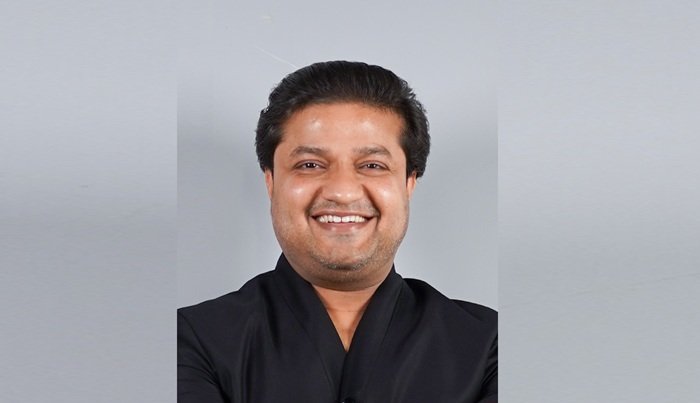
Ask Deepakk Kummar whether an MBA is still worth the money, and he doesn’t give a straight yes. “An MBA is still worth pursuing, but not every MBA is worth its fee,” says Deepakk Kummar, Founder of EIMR Business School in Bengaluru, who has spent 15 years in management education.
It’s a fair question to ask right now. Fees keep going up, placements at some well-known schools have been weak, and fewer students are signing up for full-time MBAs. Kummar’s advice to anyone on the fence is to stop thinking of the degree as a ticket to success. The better question, he says, is simple: what will I be able to do after two years that I can’t do today?
If a college offers little more than lectures and a promise of placements, he thinks students are right to be doubtful. But if it teaches them to make real business decisions, puts them in front of people who’ve actually run companies, and gives them a chance to build something, the payoff goes well beyond the first salary.
Two people and a laptop
AI has changed the maths of starting up, Kummar says. Work that once needed ten people can now be tested by two or three. But a smaller team doesn’t automatically mean a better business.
So business schools can’t just teach students to use AI tools. They need to teach them to build with AI: how to set up workflows, how to check whether what the AI produces is any good, what the data risks are, and which jobs still need a human. Hiring changes too. It’s less about how many people a founder needs and more about which skills the business can’t afford to get wrong.
“The founder’s greatest skill will increasingly be judgment,” he says. Knowing what to automate, what to hand over and what to keep for yourself.
Funding is not proof
With startup funding tighter and investors asking about profits earlier, Kummar wants students to unlearn one idea in particular: that raising money is the same as building a business.
“Funding is a resource, not proof of demand,” he says.
He wants students to work out the basics from day one: who the customer is, why they’ll pay, what it costs to serve them, and whether the business can make money in the long run. Not every startup has to be profitable straight away, he says, but founders should understand their numbers long before they walk into an investor’s office.
The same goes for the D2C and quick commerce brands that so many young founders want to build. They’re visible and easy to relate to, which is what makes them attractive. But Kummar says early buzz on social media often gets mistaken for real demand, while costs like customer acquisition, repeat orders, inventory and delivery quietly eat into margins. Quick commerce in particular is hard to run. “Speed has a cost,” he says, and growing without understanding that cost only makes the losses bigger.
He’d much rather students find a flaw in their idea through a small, cheap test than after spending lakhs trying to scale it.
Taking over the family business
EIMR runs a separate MBA track for students who will one day take over a family business. Kummar says it’s a very different job from starting your own company.
The common mistake he sees is successors thinking that modernising means throwing out everything their parents built. In the process, they can lose sight of long-standing customer relationships, unwritten know-how and trust built up over decades. At the same time, the younger generation brings things the business genuinely needs: comfort with technology, online selling, decisions based on data and a willingness to try new markets.
“The challenge is not choosing between the old and the new,” he says. “It is knowing what to preserve and what to change.”
He’s also blunt about who should run what. “A family business should not confuse ownership with competence,” he says. Being next in line doesn’t make you the best person for every role. Sometimes a family member should lead, sometimes they should learn first, and sometimes the smartest move is to bring in professionals and actually give them the authority to do their jobs.
Sustainability is becoming part of this conversation too. Large companies now report on it under rules like SEBI’s BRSR, and they’re asking their suppliers for the same data on energy, waste, labour and governance. Many family businesses have always operated responsibly, Kummar says, but proving it with proper records is another matter. Successors who set up those systems early can turn it into an advantage.
Where students need more help
Kummar credits schemes like Startup India for making entrepreneurship more visible. But for a first-time student founder, working out which scheme applies, when to apply and what papers are needed is still confusing. Many students need help with testing their idea, registering a company and basic financial planning before they’re even eligible. He’d like to see simpler processes and more hands-on guidance for founders at that early stage.
On the small share of funding that goes to women founders, he says the problem starts long before the funding stage. Women students need the same access to mentors, customers and investor conversations as everyone else. “We should avoid assuming that women entrepreneurs need less ambition or different standards,” he says. What they need is equal access to the networks where businesses actually grow.
He’s also seeing more students from smaller towns who want to build businesses back home. He thinks that’s a good thing. Smaller cities have their own customers, supply chains and family enterprises, and those can be real opportunities for someone who knows the local market. “Sometimes the strongest entrepreneurial opportunity is not in a new city,” he says. “It is in recognising what their hometown has needed all along.”
How to judge a B-school
Most parents still pick a B-school based on NIRF rankings, accreditation and average salary. Kummar says those are fair questions, and an entrepreneurship focus should never be an excuse to avoid them. But average salary means little to a student who plans to start a company or run the family business.
His advice to parents is to dig deeper: what do students actually do during the course, who mentors them, and what proof is there that they’ve improved? “Credibility must be demonstrated, not merely claimed,” he says.
If a school says it creates entrepreneurs, Kummar believes it has to measure that properly, or “entrepreneurship becomes a marketing statement.” He’d look at how many students test ideas with real customers, how many build working prototypes, how many launch businesses, and how many of those businesses survive, earn revenue and hire people.
EIMR has set itself a target under what it calls Mission 2030: to nurture more than 1,008 entrepreneurs and enable 20,000 jobs. Kummar admits the harder part now is building honest, consistent ways to report progress against those numbers.