

Why India’s Institutions Are Rethinking Exams And Evaluation

Share
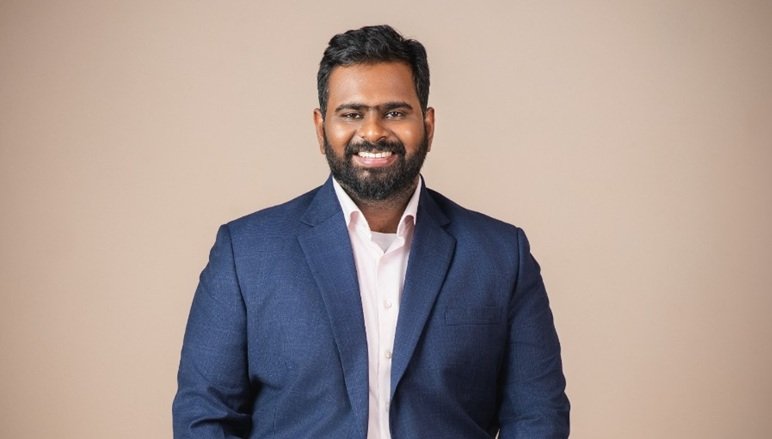
India’s education system is at an inflection point. Classrooms have gone digital, but the back-end of how learning is measured and tracked is still catching up. Universities are under pressure from accreditation bodies, students expect faster and fairer evaluation, and faculty are stretched between teaching and administrative work.
In this conversation, Dinesh Kumar Poobalan, CEO and Co-founder of Greatify, speaks about where the system is breaking down and what is changing on the ground. He traces the shift from paper-based processes to integrated digital platforms, explains why exams remain the hardest to digitise, and why data in education still sits in silos despite all the talk around analytics.
He also weighs in on the growing push towards competency-based learning, the role of AI beyond the hype, and why employability remains a gap even as placement numbers improve. At the core of his argument is a simple point. Technology alone will not fix education unless the system moves away from marks and starts measuring what students can actually do.
Q1. What was the one challenge you noticed in education systems that made you start Greatify? Universities have been running on legacy systems for years. What finally pushed them to change now?
The one challenge was the disconnect between how education was delivered and how it was measured. Teachers spend weeks on evaluation when they should be teaching. Students get marks that don’t reflect what they actually learned. Every institution I spoke to had the same problem. Scattered tools, manual processes, and zero visibility into student outcomes.
Universities changed now because the pressure became unavoidable. NAAC and NBA accreditation now demand outcome based reporting that paper systems simply cannot produce. Add to that the post COVID reality where students expect digital experiences and faculty realised they cannot scale the old way. When I started Greatify, most universities were curious. Today they are actively looking for answers.
Q2. You cover everything from exams to placements on one platform. Was that always the plan, or did it evolve over time? What has been the toughest part of getting institutions to trust a fully digital system?
The plan was always to build infrastructure for education, but we started with exams because that is where the pain was sharpest. Once institutions saw ExamX work at scale, they kept asking us the same question. Can you do this for our other workflows too. That is how learning, placements, and the rest evolved. It was customer pull, not a preset roadmap.
The toughest part is not technology, it is exam day confidence. Universities are willing to try digital for attendance or assignments, but exams are sacred. One bad experience and you lose trust for years. We spent a lot of engineering effort on offline first architecture, local storage, and fail proof submission so that even if the internet dies, the exam continues. Once institutions see that work, trust builds quickly.
Q3. Exams are still one of the most sensitive parts of any institution. How do you convince universities to move them online? Have you seen real improvements in transparency or speed after switching to digital evaluation?
You do not convince universities with a sales pitch, you convince them with a pilot. We typically start with one department, one batch, one exam. Let the faculty see the process from start to end. Evaluation time drops from weeks to hours. Marks are auditable. No lost papers, no calculation errors. Once they see that, they bring us to the next batch themselves.
The improvements are real and measurable. SRM ran over 40,000 digital exams across five campuses in 45 days on our platform, using 2,000 iPads. Faculty got results in hours instead of weeks. Students got feedback in the same cycle. That kind of speed changes how institutions think about assessment altogether.
Q4. Everyone talks about “data driven education,” but what does that actually look like inside a university? Are institutions really using data to improve outcomes, or is it still more talk than action?
Institutions are generating more data today than ever before, but the challenge is that the data lives in silos. Attendance is in one system, marks in another, faculty feedback in a third. Getting a unified view of a single student’s journey is genuinely hard, and that is not a failure of intent, it is a failure of infrastructure.
True data driven education looks like this. Every topic a student learns maps to an outcome. Every assessment measures that outcome. Over time you see where a student is strong, where they are weak, and what kind of intervention helps. That is the stack we are building with per learner knowledge graphs inside our learning platform, and we are seeing real appetite for it. Accreditation bodies are pushing institutions in this direction, and most leaders I meet genuinely want to get there. Our job is to make the path easier, not to judge where they are on the journey.
Q5. AI is everywhere right now. Where do you think it genuinely adds value in education, and where is it just hype? Do you see AI replacing parts of teaching or just supporting it?
AI genuinely adds value in three places. Generating assessment content at scale, evaluating subjective answers consistently, and personalising practice for each student. These are problems that were never solvable at scale before. Now they are.
The hype is around AI replacing teachers. It will not. Teaching is relational, not transactional. What AI does is take the grunt work off teachers so they can focus on mentoring. Question banks, first pass evaluation, proctoring, progress tracking, all of this can be automated. The human part, motivating a student, explaining a concept in a way that clicks, that stays with the teacher.
Q6. CBSE’s new syllabus is pushing more towards competency based learning. Do you think schools and colleges are ready for that shift? With changing syllabi and more focus on application, how should assessment systems evolve? Do current digital platforms support this new way of learning, or do they need to be rethought?
Honestly, most schools are not ready, and colleges are even further behind. Competency based learning means you stop asking did the student remember, and start asking can the student apply. That needs different content, different assessments, and different reporting. You cannot run it on multiple choice questions alone.
Assessment systems have to evolve from testing recall to measuring outcomes. Case studies, project work, and application based problems need to be part of the grade. Evaluation also needs to change, a mix of human and AI, with rubrics tied to specific competencies.
Current digital platforms definitely need to be rethought. Most of them are digitised versions of paper processes. They do not have knowledge graphs, outcome mapping, or adaptive pathways. We designed our learning platform from the ground up for this shift, but the industry as a whole has a long way to go.
Q7. Many institutions still struggle with basic digital adoption. What’s holding them back, money, mindset, or skills? How do you handle resistance from faculty who are used to traditional systems?
It is mostly mindset and skills. Money is usually not the blocker, especially with accreditation pressure. The real issue is that faculty have been teaching a certain way for decades, and change feels like a threat. They worry about losing control, about technology failing, about more work on their plate.
We handle resistance by showing, not telling. Find one or two champions inside the institution, give them a great experience, and let them advocate internally. Training matters, but proof matters more. Once a faculty member sees their evaluation time cut by 80 percent, they do not go back.
Q8. You are operating in India, Dubai and the US. What’s different when you step outside India’s education system? Is India ahead or behind when it comes to digitising education systems?
India has scale, diversity, and urgency that nothing else compares to. Over 40,000 higher education institutions, massive variance in quality, and a population that is hungry for education. That creates real innovation because we have to solve for low bandwidth, multiple languages, and very different institutional maturity levels.
Dubai is more uniform, more regulation driven, and moves quickly once decisions are made. The US is fragmented but deeply mature in digital adoption, though often locked into legacy platforms that are hard to displace.
India is behind on integrated workflows and depth of adoption, but ahead in necessity driven innovation. We are building products in India that can compete anywhere in the world, because we have to solve harder problems first.
Q9. You also work on placement systems. Are colleges doing enough to connect learning with jobs? What are students missing today when they step out of college into the real world?
Not enough. Colleges are still focused on placement percentages, not employability. A student walks out with a degree but often without the skills an employer actually needs. The gap is real world project experience, communication, problem solving, and the ability to work in a team.
Placement systems need to move from matchmaking to skill verification. Employers should be able to see what a student has actually built and mastered, not just marks on a transcript. That is the direction we are going with Skill Proof, a verifiable record of what a student can do, which we think will eventually replace traditional certificates.
Q10. If you look five years ahead, what will a “fully digital university” actually look like? One thing in the education system today that you think needs to change urgently?
A fully digital university in five years will feel very different. One platform for admissions, learning, assessment, placements, and alumni engagement. Every student gets an AI mentor that knows their full learning history. Industry projects are part of the curriculum. Certificates are replaced by verifiable skill records. Faculty spend more time mentoring and less time on paperwork.
The one thing I would change urgently is our obsession with marks. We are producing students who can score but cannot solve. Until we redesign assessment to measure competency instead of memory, everything else is just cosmetic.