

Why Industry-ready Skills Matter More Than Ever: LPU’s Dr Monica Gulati

Share
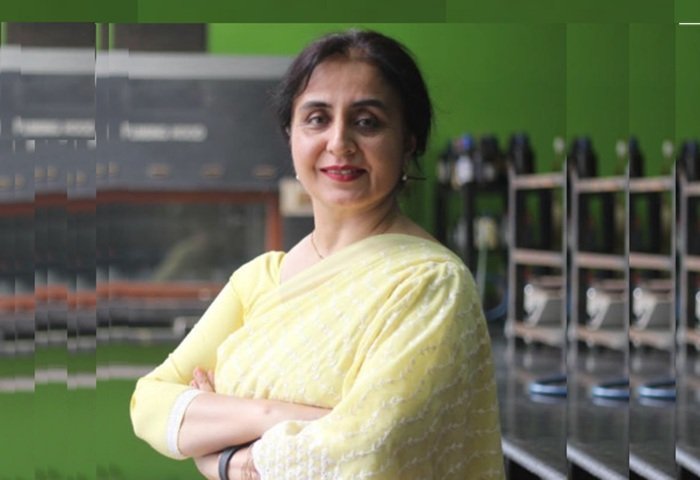
A conversation with Dr Monica Gulati, Executive Dean and Registrar at Lovely Professional University, on AI, employability, and the future of higher education in India
Walk into almost any boardroom discussion about Indian higher education right now, and you will hear some version of the same complaint. Employers say graduates come out with degrees but not skills. Universities say they are teaching exactly what the curriculum requires. Somewhere between those two positions sits a fairly large, fairly uncomfortable gap — and it is one that institutions across the country are now under real pressure to close.
Dr Monica Gulati has spent years thinking about that gap from the inside. As Executive Dean of the School of Pharmaceutical Sciences and Registrar at Lovely Professional University, she has watched the university expand into one of the country’s larger and more internationally diverse campuses — pulling in students from more than 50 countries — while trying to keep its courses relevant to an economy that barely resembles the one that existed when most of its faculty were trained. In an interview, she explained what is actually changing inside Indian classrooms and what isn’t changing fast enough.
The growth question
Ask Gulati what has driven LPU’s expansion and recognition over the years, and she does not point to a single flagship programme or a marketing campaign. Her answer is more structural — a university, she says, has to keep proving its relevance, not just its size. “LPU’s growth has been driven by a consistent focus on outcome based learning and academic relevance,” she says. The curriculum, in her telling, has had to keep moving to stay aligned with what industry actually wants, while the university has put money behind research, global partnerships, and technology-enabled learning rather than treating those as side projects.
What she returns to repeatedly is the word experiential — internships, live industry projects, direct engagement with working professionals. It is the difference, she suggests, between a degree that certifies you sat through lectures and one that certifies you can actually do something with what you learned.
Teaching for a moving target
The hardest problem in higher education today, by Gulati’s own account, is that the target keeps moving. Artificial intelligence, automation, Industry 4.0 — these are not stable subjects you can write a syllabus for once and revisit every five years. “Curriculum transformation today must be continuous rather than periodic,” she says — a line that sounds almost obvious until you consider how few institutions, in India or elsewhere, are actually built to operate that way. Most universities run on academic cycles measured in years. AI capability, by contrast, is shifting in months.
Her answer is not to chase every new trend with a new course, but to build flexibility into the system itself — industry-relevant certifications layered onto core degrees, interdisciplinary programmes that don’t lock students into rigid departmental silos, and laboratories built for the technology that exists now rather than the technology that existed when the building was constructed.
Why “industry-ready” is harder than it sounds
The employability gap is the question Gulati gets asked most often, and she does not pretend it has a simple fix. Degrees alone, she argues, were never going to be enough — what closes the gap is forcing academic learning and real-world practice to sit next to each other constantly, rather than treating internships as something students squeeze in during a summer break.
“The objective should be to prepare students not just for their first job, but for long-term career success,” she says. That distinction matters. A curriculum built only to get a graduate through their first interview is a different — and narrower — project than one built to help them adapt across an entire career, particularly in fields where the underlying technology is likely to be unrecognisable a decade from now.
She is equally insistent that technical skill alone isn’t the answer. Communication, critical thinking, the ability to work through ambiguous problems, basic leadership instincts — these, she says, are what separate graduates who merely have the right qualifications from those who can actually function inside a real organisation from day one.
Where research meets the real world
LPU’s approach to research and entrepreneurship, as Gulati describes it, deliberately blurs the line between coursework and the kind of work students might eventually be paid for. Hackathons, innovation challenges, early exposure to live research problems — the intent is to get students solving things that haven’t been solved yet, rather than only working through problems with known answers at the back of a textbook.
Incubation support and access to research infrastructure, she says, exist specifically so that a promising student idea doesn’t die the moment a semester ends. Whether that translates into a meaningful number of actual startups is the harder question — one that most Indian universities making similar claims have yet to answer with hard data. But the intent, at least, is to treat entrepreneurship as a skill to be practised rather than a buzzword to be mentioned in a prospectus.
The global classroom
International exposure, Gulati argues, has stopped being a value-add and become close to a baseline expectation. Students entering the workforce now are likely to work across borders, time zones, and cultural contexts almost by default — and a university that doesn’t prepare them for that, in her view, is leaving a real gap in the education it provides.
LPU’s approach has involved building out partnerships with universities abroad for exchanges, joint research, and semester-abroad options, alongside bringing international perspectives onto campus through visiting experts and global conferences. The scale of this — more than 50 countries represented in the student body — is one of the more concrete signals that the university has actually built something here, rather than simply gesturing at internationalisation.
What generative AI actually changes in a classroom
Perhaps the most pressing question facing every educator right now is what to do about generative AI — not as a distant trend, but as something already sitting inside how students write essays, solve problems, and prepare for exams.
Gulati’s position is pragmatic rather than alarmist. The skills universities need to emphasise, she argues, are the ones that complement AI rather than compete with it — critical thinking, creativity, and a clear-eyed understanding of how to use these tools ethically rather than as a shortcut around actual learning. That has direct implications for how students are assessed. “Assessments should move beyond traditional examinations towards project-based learning, simulations, and real-world applications,” she says — an acknowledgment, in effect, that a closed-book exam testing recall of information is increasingly a poor measure of what a student can actually do in a world where information recall is no longer the scarce skill.
The degree, reconsidered
One of the more interesting threads in the conversation is how Gulati thinks about the traditional degree itself, at a moment when micro-credentials and short online courses are proliferating rapidly.
Her view is that degrees aren’t being replaced so much as repositioned. A degree still provides something a six-week certification course cannot — foundational knowledge, sustained critical thinking practice, and a credential that still carries weight with employers and institutions. But she is clear that the degree can no longer stand alone as a one-time credential that lasts a 40-year career.
“Micro-credentials, online learning, and lifelong upskilling are complementing — not replacing — traditional degrees,” she says, arguing that universities need to build stackable certifications and flexible learning pathways into their structure, so that graduates can keep adding to their qualifications well after they’ve left campus — because the alternative, in a job market this volatile, is a workforce whose formal education stops mattering within a decade of graduation.
The part that doesn’t show up in rankings
Amid all the talk of curriculum, technology, and global competitiveness, Gulati is careful to flag something that gets discussed far less in higher education circles than it probably should: student well-being.
Mental health and digital well-being, she says, are not peripheral concerns to be handled by a counselling office tucked away on campus — they are foundational to whether students can actually engage with everything else the university is trying to build. LPU’s approach includes counselling services, mentorship, and structured workshops on resilience and mindful technology use, alongside the more traditional outlets of sports and cultural activity.
It is a reminder that for all the talk of AI readiness and global competitiveness, universities are still, fundamentally, dealing with young people navigating one of the more disorienting stretches of their lives — and that a curriculum built for the future means very little if the students sitting through it aren’t supported enough to actually absorb it.
The larger ambition
Pull back far enough, and Gulati’s vision for where Indian higher education needs to go is fairly direct: globally competitive, genuinely industry-driven, serious about research, and accessible to a much wider range of learners than the system currently serves.
Whether institutions across the country can actually deliver on that — given uneven funding, regulatory constraints, and faculty shortages that affect far more universities than the well-resourced ones — remains an open question. But the direction Gulati describes is at least a coherent one: less rigid teaching, more interdisciplinary thinking, stronger links to industry, and an acceptance that learning, for any graduate entering today’s job market, does not end with a convocation ceremony.