


AI Cannot Replace A Designer’s Thinking, Says Rinesh Dalal

Share
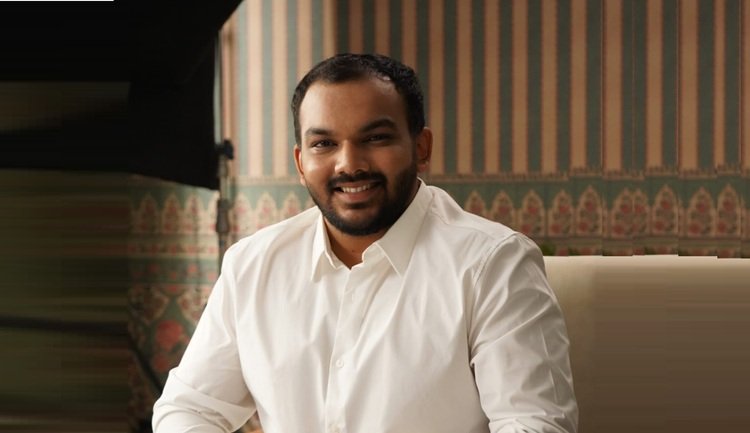
In 1988, a man with an accounting background opened a small fashion school in two rooms in Mumbai. He had no formal training in design. Everything he knew, he had taught himself from books, and he wrote the first curriculum on his own. About 30 students signed up.
It took about four decades to JD Institute of Fashion Technology to set up more than 52 learning centres, a presence in Sri Lanka, Nepal and the UAE, and over 2,00,000 graduates. Rinesh Dalal, who now leads the institute as Director, says that what strikes him most about those early days isn’t how small they were.
“What stands out to me about that beginning is not just the scale, but the willingness to learn, experiment and build something from the ground up,” he says.
Holding on to that spirit while running an institution of this size is, by his own admission, the real job.
Growing Without Losing the Plot
At JD’s current scale, Dalal has to think about consistency, access and an industry that has become far more complicated than it was in the 1980s. But he is clear that growth shouldn’t change what design education is at its core.
“Design is fundamentally a practical discipline,” he says. Students need to understand materials and construction, think visually, and learn how an idea becomes something you can hold. Just as importantly, they need room to get things wrong.
“The format of education may evolve, but the need to learn by doing will remain.”
A Filmmaker’s Eye
Dalal didn’t come to JD from the fashion world. He came from filmmaking, working on advertising films and music videos, and that background shapes much of how he thinks.
“Film teaches you that an idea is only the beginning,” he says. “You have to think about how it will be communicated, how different elements will come together and how the final outcome will connect with an audience.”
On a film set, a great concept means little without planning, budgets, deadlines and a team pulling in the same direction. He sees the same thing in design. A student might make a beautiful garment or a striking interior concept, but they also need to understand where that work will live and how to explain why it matters.
Film also taught him not to think in boxes. Fashion, media, storytelling and digital content now feed into each other constantly, and that’s why JD has branched out into JD Online, the JD Podcast and the JD Institute of Films & Multimedia.
“Education should prepare students for the creative world as it exists today, rather than restrict them to the boundaries of a single discipline,” he says.
One Institute, Many Cities
Expanding across India and abroad brought its own puzzle. A student in Mumbai grows up around very different influences from one in Jammu, Indore, Ranchi or Pune. Markets in Colombo, Kathmandu or Dubai have their own tastes and traditions.
Dalal’s answer is to hold the basics steady and let the rest respond to place. Every design student, he says, needs to think critically, understand materials, solve problems and develop a voice of their own. Beyond that, they should understand the design traditions and opportunities right around them.
“The aim is not simply to make education available in more locations, but to help students understand where their skills can take them.”
More Than Just “Fashion Designer”
For a long time, studying fashion meant one career path. That’s no longer true, and Dalal wants students to look wider.
Styling, fashion communication, visual merchandising, costume design, creative direction, fashion films, digital content and brand storytelling are all real options now. So are interior styling, product and lifestyle design, and multimedia work.
What excites him most is how these roles blur into one another. Someone who understands fashion might shape a brand’s visual identity, run its campaigns, create its content and one day launch a label of their own.
He’s careful not to suggest students should try to master everything at once. Build a strong base in what interests you, he advises, then explore what’s next to it.
“A career in design does not have to follow one fixed path. It can evolve as people discover their strengths and new opportunities emerge.”
Mind the Gap
Ask anyone who hires designers, and they’ll talk about the gap between what graduates know and what the job needs. Dalal doesn’t pretend it can be closed overnight.
In college, students explore ideas. At work, those ideas have to survive deadlines, budgets, demanding clients and production limits. A designer has to explain decisions, take feedback, understand the audience and change course when something doesn’t work.
JD tries to bridge this through platforms like the JD Design Awards, which put student work in front of the wider creative world. Dalal also wants students to understand the business side of their craft. A good portfolio, he says, should show not just what someone can make but how they think.
AI Is Not the Problem
On the question that every design school is wrestling with right now, Dalal is refreshingly calm.
“The bigger question is not whether students will use AI. They will, and they should understand how to use it,” he says. “The question is whether they can think independently when the tool is taken away.”
AI can throw out a dozen visual directions in seconds. What it can’t do, he points out, is tell you why one of them works, who it’s for, or whether it can actually be made. Students who accept the first thing a tool gives them risk producing work that looks polished but has nothing of themselves in it.
“I don’t see AI as a threat to design education in itself. I see uncritical dependence on it as the real concern.”
He feels the same way about digital tools more broadly. A digital render of a garment can’t teach you how fabric falls, and a 3D visual of a room can’t teach you how materials behave in real life. That hands-on experience builds judgement, and judgement is what separates a designer from someone using software.
“Technology should expand what a student can do, not become a substitute for developing the ability to think.”
From Portfolio to Market
Dalal’s newest bet is House of JD, a curated marketplace spanning fashion, interiors, textiles, art, objects and lifestyle products. It brings together JD students and alumni, emerging designers, established labels and limited-edition collaborations.
The idea came from a simple observation. Education gives people skills, and a portfolio proves those skills. But neither guarantees that a young designer’s work will ever reach a buyer.
“For emerging designers, that transition can be particularly challenging,” he says. “They may have an interesting point of view and the ability to create something distinctive, but they also need visibility, access and opportunities to connect with consumers.”
House of JD isn’t trying to stock everything. The focus is on careful selection. When deciding whether a piece is ready, Dalal looks first for a clear point of view. Is the designer chasing a trend, or making deliberate choices? Then come execution, detail and quality, and finally the market questions: who is this for, does it meet their expectations, and can it be produced in a way that makes sense?
“Something can be an excellent learning project and still need further development before it becomes a product,” he says.
What Lasts
Talent and technical skill will get a student started, Dalal says, but they won’t carry a career for twenty years. For that, you need curiosity, the ability to adapt and the habit of learning constantly. You need to communicate, collaborate and defend your ideas without getting defensive. You need resilience, because creative work comes with plenty of rejection. And you need a basic sense of how money, audiences and deadlines work.
Most of all, he says, you need your own perspective. “Tools, platforms and trends will change, but the ability to observe carefully, think critically and make considered creative decisions will continue to matter.”
The Next Ten Years
Looking ahead, Dalal isn’t measuring success by the number of new centres or courses. He wants JD to become a wider ecosystem where young creative people can learn, experiment, meet the industry and find their own way forward.
“Over the next ten years, I would like JD to be known for adapting to change without losing sight of why design education matters in the first place,” he says. “Growth is meaningful when it creates better opportunities for people.”
His advice to students thinking about a design career is honest, and a little tough.
“Don’t choose design only because you enjoy looking at beautiful things,” he says. “Choose it if you are interested in understanding how things are made, why they work, how they affect people and how you can bring your own ideas into the world.”
For an institute that started with one self-taught founder and a stack of books, it’s fitting advice.
One thing to check before publishing: the interview says JD was founded by Dalal’s father in the first and last answers, but by his grandfather in the first answer. I’ve written around it by not naming the relationship in the opening, but it’s worth confirming with JD so you can state it clearly.