

Odisha Just Landed ₹2.47 Lakh Cr in New Investment. Here’s Where It’s All Going

Share
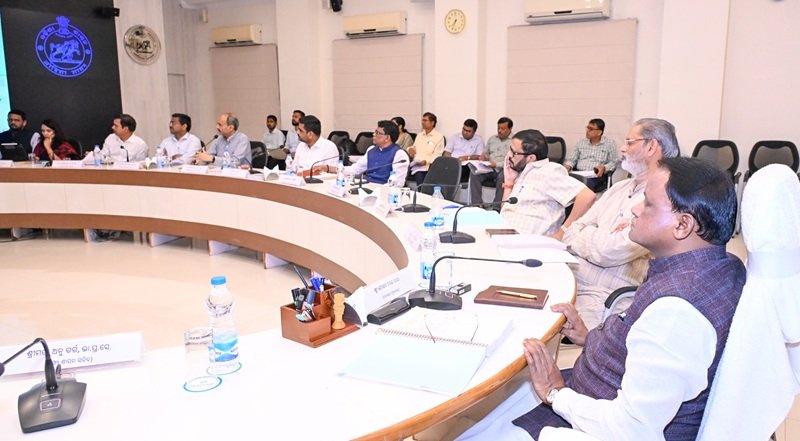
Odisha’s industrial story just got a major new chapter. At the 46th meeting of the High-Level Clearance Authority (HLCA), chaired by Chief Minister Mohan Charan Majhi, the state cleared 27 major projects worth a combined Rs 2,47,115.70 crore, spread across 15 districts. Between them, these projects are expected to create over 50,000 jobs, and just as notably, they pull Odisha into industries it’s rarely been associated with before: AI data centres, lab-grown diamonds, semiconductors and green hydrogen, alongside the steel and power sectors the state has long been known for.
Data Centres Are the Big Story
If there’s one number that stands out here, it’s this: nearly 58% of the entire investment pipeline, Rs 1,42,941 crore, is going into IT, ITES and data centres alone. That’s an extraordinary concentration for a state that hasn’t historically been on India’s digital infrastructure map.
The headline project is a Rs 1,04,550 crore integrated data centre park from High Density Data Centre Limited in Khordha, expected to create 1,000 jobs. HCL Technologies is building a Rs 14,257 crore AI-optimised data centre in the same district, while Sentraforge AI is setting up a data centre paired with a Global Capability Centre in Puri, worth Rs 22,634 crore and projected to employ over 2,300 people. A smaller data centre facility from RKD Construction, worth Rs 1,500 crore, rounds out the segment in Cuttack.
Taken together, it signals that Odisha is positioning itself as a serious contender in India’s AI and cloud infrastructure race, not just as a manufacturing state.
Power and Energy Get a Rs 54,000 Crore Boost
Right behind data centres is a substantial push into power infrastructure, four projects worth Rs 54,287.70 crore, expected to generate 5,300 jobs. NLC India Limited is behind two of the biggest ones: a 3,200 MW thermal power plant in Debagarh (Rs 34,763.51 crore) and a 1,080 MW plant in Angul (Rs 11,604.19 crore). Alongside these, two pumped-storage hydro projects are coming up, a 600 MW plant from BEKEM Infra in Rayagada and a 750 MW plant from Avantika Contractors in Koraput, adding storage capacity that renewable-heavy grids increasingly need.
Lab-Grown Diamonds Keep Growing
Odisha’s lab-grown diamond ecosystem, already an emerging niche for the state, just got five new projects worth Rs 10,680 crore and a projected 8,850 jobs. Dholakia Lab Grown Diamond is investing the most here, Rs 4,500 crore in Khordha, with Greenlab Diamonds, Neorganic Diamonds, Nouveau Diamonds and Supreme Green Diamonds rounding out the cluster across Khordha and Ganjam. It’s a sector that’s quietly become one of the more labour-intensive parts of this entire investment package, generating jobs at a much higher rate per crore invested than most other sectors here.
Steel, Semiconductors and the Green Energy Push
Steel remains a core strength for Odisha, and two new projects in Sundargarh add Rs 14,000 crore and a striking 17,000 jobs to that base: an expansion of Rungta Mines’ existing steel plant, and a new integrated steel-cum-cement-cum-power plant from Shakambhari Ispat & Power.
On the newer, more technical end, SICSEM Pvt Ltd is setting up a Rs 2,078 crore facility in Khordha to manufacture Silicon Carbide wafers and Gallium Nitride, materials central to next-generation semiconductors and power electronics. Nearby, Aare Solar is building a 10 GWh battery storage assembly plant in Nuapada, and Larsen & Toubro is putting up a green energy equipment manufacturing unit in Ganjam, together adding Rs 6,050 crore toward Odisha’s green-tech manufacturing base.
There’s also a genuinely futuristic addition: Jiribam Solar Power is setting up a Rs 3,000 crore facility in Kendrapada to manufacture green hydrogen, green ammonia, green methanol, and even electro-sustainable aviation fuel, positioning Odisha at the edge of the clean fuel transition well before most Indian states have entered that space.
Healthcare, Shipbuilding and Everything Else
The list rounds out with a genuinely diverse mix. The Adani Foundation is building a 1,000-bed multi-super-speciality hospital in Khordha, worth Rs 2,150 crore and expected to employ 1,700 people. Tata Steel is investing Rs 3,329 crore in a large iron ore grinding unit with a slurry pipeline in Jajpur, strengthening logistics for the Kalinga Nagar industrial belt. L&T is also expanding into advanced fabrication and shipbuilding in Ganjam, two projects worth Rs 3,100 crore combined. And textiles, chemicals and auto-components get their own boost too, from Grasim Industries’ chemical plant, Talcher Gasifier’s chemical manufacturing unit, Leaomax Textile’s composite mill in Kalahandi, and Chiripal Poly Films’ tyre manufacturing unit in Bhadrak.
What It Adds Up To
“The scale and diversity of investments approved in the 46th HLCA reflect the growing confidence of investors in Odisha and the transformation of our industrial landscape,” Chief Minister Mohan Charan Majhi said while addressing the meeting. “From data centres, artificial intelligence and semiconductors to green energy, advanced manufacturing, steel, healthcare and emerging industries, Odisha is creating new engines of growth while strengthening its traditional industrial base.”
What stands out most, beyond the sheer size of the numbers, is the spread. These 27 projects aren’t clustered in one or two industrial hubs, they touch 15 districts, from the established industrial belt around Jajpur and Sundargarh to less conventional locations like Kendrapada, Nuapada and Rayagada. That geographical reach appears deliberate, part of a broader push to make sure industrial growth doesn’t stay confined to the same few pockets of the state.
Framed against the national “Viksit Bharat by 2047” vision and Odisha’s own “Samruddha Odisha by 2036” goal, this round of approvals reads less like a one-off announcement and more like a statement of direction, a state betting heavily on becoming a genuine hub for digital infrastructure, clean energy and advanced manufacturing, while still holding on to the steel and power industries that built its economy in the first place.