


India Is a Strategic Priority for Kedge’s International Development: Alexandre de Navailles

Share
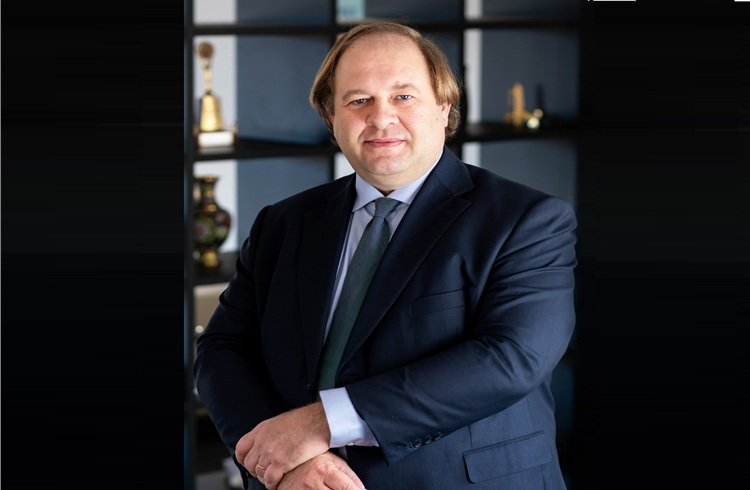
As global business schools look beyond traditional markets, India is emerging as a key destination for international expansion. For French institution KEDGE Business School, the country is more than a recruitment base. It is central to the school’s long-term strategy as it seeks to deepen academic partnerships and tap into India’s fast-growing higher education ecosystem. In this interview, Alexandre de Navailles, Director General of KEDGE Business School, speaks about why India has become a strategic priority, how the school is building partnerships with Indian institutions, and how management education is evolving in the age of AI, digital learning and sustainability.
KEDGE positions itself among Europe’s leading business schools. What made you turn to India?
India is not just a new market for KEDGE, it is a strategic priority of our international development. Beyond its scale, what stands out is the dynamism of its higher education ecosystem and the ambition of its students. We already have long-standing collaborations with top institutions such as the Indian Institutes of Management or Vijaybhoomi University and welcome an increasing number of Indian students to our campuses. Our partnership with Vijaybhoomi University reflects a natural synergy: KEDGE brings strong expertise in supply chain, logistics, and management, while Indian students offer excellent technical and engineering skills. Combined with strong Franco-Indian relations, this creates a powerful partnership.
How do you see India fitting into KEDGE’s international expansion plans?
Our ambition is clear: strengthen our global positioning with long-term partnerships in regions with high potential. India naturally fits into this approach. This means expanding international recruitment, internationalizing our faculty and co-developing programs that are relevant to local needs while offering a global exposure. The collaboration with Vijaybhoomi University is a concrete example of this balanced model.
Have you tied up with any schools for international exchange programmes? If yes, how are these different from others?
KEDGE has strong partnerships with institutions among the top-ranked institutions in India. These collaborations enable student exchanges and cross-cultural academic experiences: Indian students benefit from an international education while studying on our French campuses and French students experiencing academic life in India. Beyond traditional exchanges, we aim to offer students a fully immersive experience: different teaching methods, new cultural perspectives and opportunities across borders. This also helps students develop strong intercultural understanding, which is essential to doing business effectively in different environments such as Europe and India.
Are there specific partnership or collaboration models you are exploring with Indian institutions?
We believe in deep academic partnerships rather than purely transactional exchanges. With Vijaybhoomi University and JAGSoM, we are working on programme co-design and shared pedagogical approaches. For instance, our newly launched bachelor program in business with VU is unique in its conception. It allows students to complete fully their degree jointly designed by VU and KEDGE either entirely in India, or in a dual-country modality where students can choose to finish their studies in France. Students have the possibility of obtaining two degrees and continuing their education in Europe.
Similarly, our set of MSc programs jointly conceived with VU, allow students a pathway to Europe or they may decide to stay in India if they wish. We are working with companies to design an offer that allows students to start their career in France and move to India if they wish to. This allows us to combine KEDGE’s academic expertise with local knowledge and context.
It allows Indian students to benefit from an international education while remaining rooted in their own environment. At the same time, it fosters the ability to navigate across cultures and understand how business practices differ between regions such as India and Europe.
What are the biggest challenges facing European business schools today?
European business schools face several major challenges:
- A demographic decline and aging population in Europe, pushing institutions to internationalize and attract talents from abroad.
- The rise of highly competitive Asian universities, increasingly visible in global rankings, requiring European schools to continuously adapt their models, teaching, and research excellence.
- The transformation of teaching methods driven by AI, requiring programs to evolve to better meet companies’ needs.
- The growing importance of sustainability and societal impact for future generations which is reshaping management education.
How is KEDGE rethinking the traditional business school model at a time when digital learning and hybrid classrooms are becoming the norm?
KEDGE has been developping digital and hybrid learning approaches for several years. Our goal is to ensure that technology enhances learning without replacing the human dimension of education. We integrate AI and data across our programmes to develop students’ digital fluency.
We offer online programmes and in-person formats to offer flexibility, while maintening a strong emphasis on interaction and experiential learning. We also support entrepreneurship through our digital incubators. At the same time, we place increasing emphasis on critical thinking, creativity and what we call “human intelligence”, ensuring that students can use technology with discernment and responsibility.
What role does digital transformation play in shaping KEDGE’s academic delivery and student experience?
Digital transformation is central to our approach. It not only requires strong technical skills, but also reinforces the need for critical thinking, ethical awareness and human judgement. We aim to prepare students to become “digital-ready” graduates who can meet companies’ expectations. We integrate digital tools and data across our programmes to help students develop both practical skills and critical thinking, particularly in areas such as digital marketing and supply chain digitalization. This enables them to become graduates who are able to navigate complex and evolving environments, combining technological expertise with strong human and analytical skills.
Sustainability and responsible leadership are now central to management education. How is KEDGE embedding these values into its curriculum and research?
KEDGE has long been a pioneer in sustainability and responsible leadership. The creation of KEDGE Impact in 2021 has reinforced these values across all programmes and disciplines rather than treated as a standalone topic. CSR is integrated into finance, marketing, strategy, and management courses. Students explore how environmental and social challenges influence all areas of business. Our “learning by doing” approach is particularly effective, with action labs and company projects enabling students to apply these principles in real-life contexts.
How do Indian students benefit from KEDGE Business School? What unique propositions does it offer?
KEDGE offers a gateway to global careers while remaining relevant to local and regional contexts. France also remains a leading hub for industries such as luxury, logistics, and innovation, providing strong professional exposure. Combined with our Triple Crown accreditation—held by only 1% of business schools worldwide—this ensures that KEDGE degrees carry significant international value. It also helps students build the intercultural agility required for international careers.
What will be the admission criteria?
Admissions are based on academic performance, motivation, and international outlook. We are looking for students who are curious, engaged and ready to embrace a global learning experience.