
Why Culinary Arts Is No Longer an ‘Alternative’ Career Choice

Share
The Evolution of Culinary Arts as a career option in India: From Family Tradition to a Global First-Choice Career
In India, for centuries, like all skill oriented professions, the culinary arts was also defined by family linked tradition. Culinary knowledge was primarily viewed as a family occupation, where recipes and techniques were guarded secrets passed down from one generation to the next.
A similar pattern was seen in the development of continental cuisine within the subcontinent. Traditionally, the finest cooks of Western styles hailed from Kolkata or Goa—regions deeply influenced by British and Portuguese colonial occupation. In these locations, local boys learned the art of Western cooking directly from foreign masters as their domestic staff. However, this expertise still remained localized and within the family confines.
Because this knowledge transfer remained within the domestic or community sphere, and combined with the stigma attached to Skill oriented job profiles especially where academics were not the prerequisite, there was little to no perceived need for formal culinary institutes or structured career paths for those outside of these lineage-based systems. Hence culinary arts was not a sought after career choice.
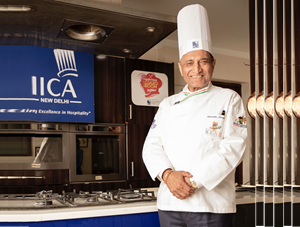
Actual orientation of culinary arts as a career came with the advent of the entry of international hotel brands into India by Indian Hoteliers like The Oberoi and The Indian Hotel Company, Taj Hotels etc. With international brands, the professional expatriate chefs arrived to lead these kitchens, they brought a systematic approach to knowledge transfer. I was the first educated Indian who had completed 4 years of Hotel Management studies followed by two years of extensive Hospitality Administration program by Oberoi Hotels realised the value and advantages of culinary Arts and became a Kitchen trainee and after an extended work experience became executive chef of India’s biggest hotel in India at the age of 27 and in the process replaced a high cost expatriate chef. As the hospitality industry expanded, it was the Oberoi hotel who introduced the concept of Kitchen Management trainees, opening the door to young and dynamic career oriented individuals who saw culinary arts as an alternate option. Since the demand for trained chefs was higher than the supply, this necessitated the entry of formal culinary institutes, finally framing culinary arts as a legitimate academic and professional career option. IICA, New Delhi was my pioneer initiative to launch India’s premiere culinary Institute with International affiliation in the year 2005.
Historically, the profession faced significant social stigma in India. It was often dismissed as a back of the house job that required no formal communication or social skills and thus reserved for those who were economically weaker or academically less inclined. This perception has undergone a radical transformation. The awarding of prestigious recognitions like the Padma Shri to culinary legends, combined with the massive cultural impact of competitions like Master Chef propelled by extensive social media coverage and media support has elevated the chef’s status to that of a celebrated artist and professional with unlimited career progression options.
The modern chef’s influence extends far beyond the traditional kitchen; the field offers unlimited work options in Cruise liners, Industrial catering, food styling, entrepreneurship, and food technology. Being a chef now offers a truly global passport, providing opportunities to work across cultures and continents..
What was once a humble family craft is now a robust, creative, and highly respected global profession for individuals seeking work diverse work opportunities combined with adventure, creativity, and a rewarding lifestyle?
Without doubt, Culinary Arts Is No Longer an ‘Alternative’ Career Choice.
Views are personal
The author, Virender Singh Datta, is Founder and chairman, IICA, New Delhi