
IP University Holds Seminar On AI For Disability Inclusion, Accessibility

Share
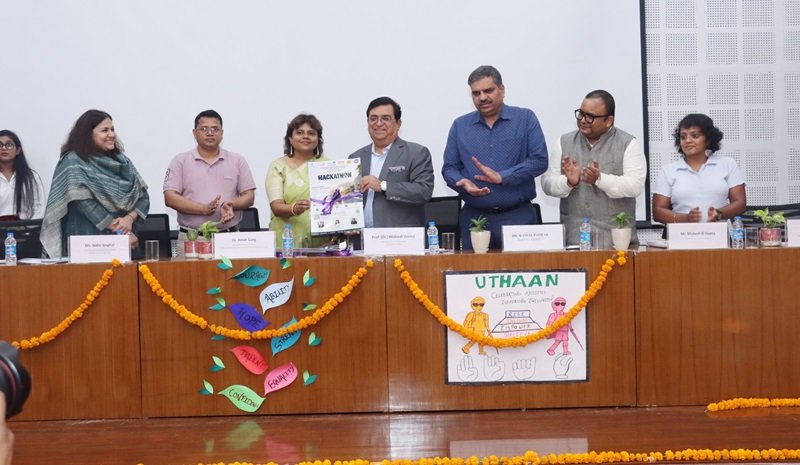
Guru Gobind Singh Indraprastha University (GGSIPU) organised a seminar on “AI for Disability Inclusion and Accessibility: Pathways for Higher Education”, bringing together educators, researchers, students, professionals and organisations working in disability inclusion, accessibility and assistive technology.
The seminar, organised under Prof. (Dr.) Shalini Garg, Dean, University School of Management Studies (USMS), and Programme Director, UIAC-UTTHAAN, focused on the theme “Reimagining Technology Through AI to Promote Accessibility, Challenge Ableism and Create an Inclusive Society”.
Garg said AI can play an important role in improving digital accessibility and called on higher education institutions to adopt responsive and assistive technologies to reduce educational barriers and create more accessible learning environments.
The keynote speakers included Nidhi Singhal, Director (Research & Trainings), Action for Autism, National Centre for Autism India; Dr Amar Garg, Consultant Prosthetist & Orthotist, Orthopro Artificial Limb Centre, a unit of Orthopro Healthcare Services; and Somil Raheja, Founder and CEO, Five Anchor Technologies.
The programme was presided over by Prof. (Dr.) Mahesh Verma, Vice Chancellor, GGSIP University. He stressed the need to make inclusion and accessibility part of institutional culture and said educational institutions must recognise diverse abilities and ensure equitable participation.
The discussions examined how AI and assistive technologies can support accessibility, independence and participation in higher education. Speakers pointed out that technology is not automatically inclusive and that its impact depends on how it is designed and whether diverse experiences and needs are considered.
The seminar also looked at accessibility beyond physical infrastructure, including academic content, learning materials, administrative systems, digital communication and campus navigation.
Singhal discussed the experiences of autistic individuals and the need for evidence-based support and learning environments that respond to neurodivergent needs. She also stressed the importance of involving autistic people in research and in the development of technologies and support systems intended for them.
Dr Amar Garg spoke about the role of assistive technology in addressing physical barriers and improving mobility and independence. He explained how CAD/CAM and 3D scanning can help develop customised solutions. He also discussed technologies such as the Ottobock C-Leg, Genium and sensor-based C-Brace computerised orthosis.
Raheja discussed communication barriers faced by people with neurological conditions and presented SignVision, a tool intended to convert sign language into speech in real time. He linked the development of the technology to his cousin’s experience of using sign language when people around him could not understand it.
The programme also discussed how AI could help students with disabilities navigate campuses, access classrooms and administrative systems, use learning materials and complete assignments. Speakers called for greater attention to invisible disabilities and for academic content and assignments to be made more accessible and disability-affirming.
The seminar also raised questions around AI accountability, including what information is used to develop such systems, whose experiences are represented and who is responsible when technology fails to respond to diverse needs.
A student hackathon was organised around the seminar’s theme. Team Nischit secured first place with SamarthAI, a solution aimed at improving digital accessibility for people experiencing hand tremors and limited motor dexterity.
The programme also recognised organisations and initiatives working on disability inclusion and support for diverse communities, including MERI, GIFTABLE, Vision Divyang and Action for Autism.
The discussions highlighted the role of environmental and institutional barriers in limiting participation by persons with disabilities and explored how AI could help address these barriers in education, employment and independent living.
The programme concluded with a call for researchers, educational institutions and technology developers to involve persons with disabilities in the design and development of technologies and keep accessibility, autonomy and human dignity at the centre of future AI applications.