

“Parents Today Want Trust And Stability, Not Constant Experimentation”

Share
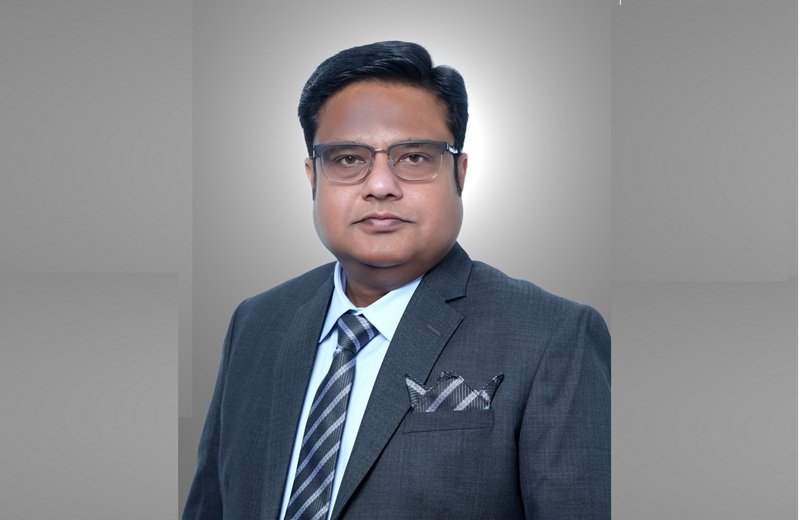
In a competitive K-12 market that is constantly changing, schools are quickly rebranding, at the same time Radcliffe Schools makes it clear that its transition is not going to be a matter of just a new logo or more powerful communication. In an email interview with EduKida, Himanshu Yagnik, the Chief Executive Officer of Radcliffe Schools, elaborates on the reasons behind the group’s decision to rebrand at this point, what has already changed in the classrooms, and how Radcliffe 2.0 is trying to keep pace with new parent expectations, future skills, and the need to maintain a balance between innovation and academic discipline.
What convinced you for rebranding?
The reason for rebranding was mainly based on the realization that the situation surrounding education has changed radically for students, parents, and teachers. Learning today is not just about small improvements but rather it is about the complete transformation of one’s mindset, the way of teaching, and also taking more responsibility.
Radcliffe had reached a point where the getting festival of the new identity was very crucial and had to be reflected very clearly in all aspects of the school life such as the classrooms, the culture, and the identity. This rebranding is not a reboot but it is a change in the course of history-it is a conscious move in the longitudinal direction to align our goal, methods, and commitment with the fact of a rapidly transforming world. Rebranding was justified by the profound awareness that the situation of schooling had changed completely-for students, parents and teachers. e.g. Learning nowadays is not just a matter of gradual improvements; it demands a complete transformation in the company’s philosophy, the way it operates, and the measures of its accountability.
Radcliffe had come to a point where it was obvious to everyone that the school was becoming the kind of place that had to be expressed clearly in its presenting-in the classrooms, the culture, and the identity. This rebranding is not a restart but a growth-a deliberate move to change the position of our purpose, the methods through which we work and the promise given to our audience to be in line with the so fast changing world.
What changed on the ground apart from the new identity?
Radcliffe 2.0 rests on substantive academic and cultural change, rather than cosmetic rebranding.
On the ground we have:
Curriculum frameworks redesigned with clearer learning outcomes
Improved academic governance and review structures
Invested heavily in continuous teacher upskilling and AI powered classrooms
Shifted to purpose-led education beyond syllabus completion.
Introduced structured,skill based programs such as REACH, RAISE, Propel, RadBoost and RASP focused on skills, remediation and student progression. The new identity simply reflects what has already begun transforming inside classrooms.
Has the changing parent mindset influenced the rebranding?
For sure, today’s parents are much more knowledgeable, critical and goal-oriented than even just a couple of years ago. Their worries include not only the grades but also safety, health, future skills, and openness. Radcliffe 2.0 has intentionally been created reflecting these truths-by reinforcing systems, raising accountability, and being more explicit about the expectations of parents and our way of achieving them. The rebrand reflects a school group that is listening closely and responding thoughtfully.
How did you ensure the rebrand was rooted in teaching reality, not just marketing?
We were very deliberate about starting inside the classroom, not with external narratives.
Our proprietary framework RadSPARK was co created by the active contributions from teachers, academic leads, and principals. Messaging and visuals developed once changes in pedagogies, assessment practices, and teacher development had already taken place.
In that sense, the brand is a translation of lived academic reality, not an aspiration disconnected from it.
How would you balance a national identity with local relevance across 20 campuses?
This is one of the more complex aspects of scale. Our approach is to anchor all campuses to a common academic philosophy, quality benchmarks and values while allowing flexibility in how they are implemented locally. Local context-culture, language, community needs-is respected, but never at the expense of academic standards. This balance allows Radcliffe to feel nationally consistent yet locally meaningful.
What does “future-ready education” mean in practice at Radcliffe?
For us, future readiness evolves with age:
Foundation stage: inquisitiveness, assurance, basic reading and math skills
Intermediate stage: team work, logic, flexibility, and finding solutions
Final stage: decisive thinking, toughness, moral decision making, and independence
The goal is to ready the learners not only for the upcoming test but also for their future options, difficulties, and transformations.
How do you balance innovation against board and examination requirements?
Boards and exams remain important, but they are not the sole definition of learning.
We align innovation with academic rigour: strengthening conceptual understanding, application-based learning and assessment literacy. This gives students success in exams because they understand deeply, not because they memorise narrowly.
Innovation, in this sense, supports outcomes rather than competing with them.
What changes can parents and students expect over the next 2-3 years?
Parents will see
Greater consistency of academic quality across campuses
Stronger teacher capability and confidence
Clearer communication of learning progress and achievement
More structured exposure to skills, well-being, and future readiness
Students will experience learning that is more engaging, relevant, and purposeful, without compromising academic discipline.
What do parents still want that schools aren’t providing in an overcrowded K-12 market?
Many schools talk about innovation, but parents are often looking for reassurance and trust.
They want:
Stability, not constant experimentation
Teachers who are confident and cared for
Systems that work quietly in the background
A school that treats their child like an individual, not a number
Fundamentals that are too often slighted-and matter intensely.
- In what ways does Radcliffe 2.0 deal with screen time, attention and burnout at the same time?
Not a mass digitization but rather a technology-driven use, our approach is one that has a purpose.
Screen time is purposeful, suitable for the age, and combined with talking, exercising, and thinking. Better learning design gets attention and burnout tackled instead of just increasing content or hours longer.
The goal is sustainable learning, and not a never-ending thrill. - How would you put it—Radcliffe 2.0 in a single sentence (without using jargon)?
Radcliffe 2.0 is a real shift from teaching by subjects to the developing of confident and thoughtful individuals who are not just ready for life, but also for the next exam, if they have to take one.