


“No University Can Guarantee a Job”: CBU’s Dingwall Warns Indian Students Against False Promises

Share
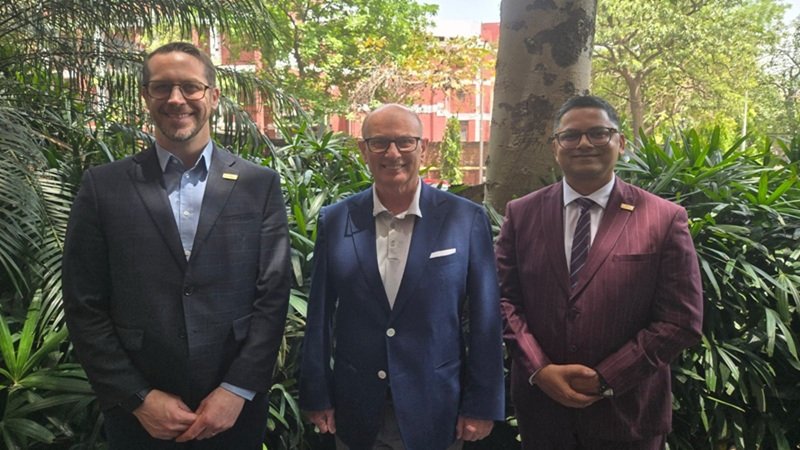
As visa delays, rising costs and tighter immigration rules force Indian students to think harder about studying abroad, Canadian universities are reworking how they approach one of their biggest international student markets.
That shift was clear during a recent India visit by Cape Breton University President and Vice-Chancellor David Dingwall, who said the future may lie less in asking students to move abroad for full degrees and more in building flexible pathways with Indian institutions.
Speaking during his visit, Dingwall said the university is in talks with multiple Indian colleges and universities to explore partnership models such as 2+2 and 1+3 programmes, where students split their education between India and Canada.
The message reflects a broader reality. For many Indian families, overseas education has become a higher-stakes financial decision, particularly after recent visa delays and policy changes in Canada.
Dingwall acknowledged those concerns directly. He said long processing times for Indian student visas have become a serious barrier, with students often waiting months for decisions.
“If students have to wait six months, they will go somewhere else,” he said.
Rather than promise easy migration routes, Dingwall struck a cautious note on employment and residency. He warned students and parents against institutions that claim to guarantee jobs after graduation.
“No university can guarantee a job,” he said. “What we can guarantee is a first-class education and support toward building a pathway for employment.”
For Indian students evaluating overseas options, the university is positioning itself around sectors where labour shortages remain acute in Canada.
Healthcare tops that list. Dingwall said Nova Scotia is facing shortages of doctors, nurses, pharmacists, X-ray technicians and other healthcare professionals as older workers retire faster than replacements can be trained.
Energy is another area of demand, especially as Canada expands renewable energy and transmission infrastructure. The university says it is seeing growing need for engineers, technicians and specialists in wind, environmental and sustainable energy systems.
The institution is also expanding its academic offering in newer fields, including artificial intelligence, digital marketing and business analytics, while continuing to attract Indian students to programmes in public health, engineering technology, nursing and hospitality.
Cape Breton University is also investing heavily in infrastructure, with nearly $290 million being spent on campus upgrades, including a new medical school and expanded research facilities.
But the larger signal from the visit may be strategic rather than infrastructural.
As India pushes to strengthen domestic higher education and retain more students under its internationalisation agenda, foreign universities are increasingly being forced to adapt. Dingwall said Canada-based institutions can no longer assume Indian students will simply relocate abroad for full degrees.
Instead, he said, universities will need to fit into India’s changing education landscape through research partnerships, joint programmes and hybrid delivery models.
“We have to focus on what is in the best interest of the student,” he said repeatedly through the interaction.
That may prove to be the key test for universities courting Indian students in 2026: not who recruits the most, but who offers the clearest pathway in a more uncertain global education market.