
Why Schools Need Better Learning Tools, Not Just Policies: Atishay Jain, Koncept Global Books

Share
India’s school system is changing. New policies like the National Education Policy 2020 and the National Curriculum Framework talk a lot about new ways of learning. Things like skills, thinking, and real-life understanding. But inside many classrooms, the change is still slow. Schools want to follow these ideas. Still, teachers often do not have simple tools or books that help them do it properly.
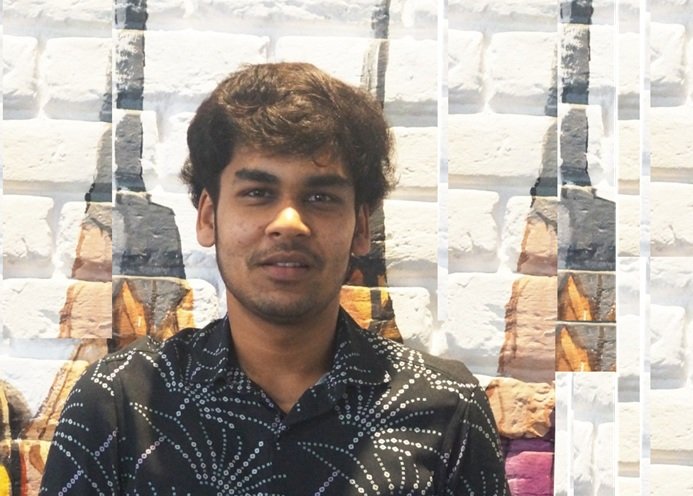
This is where Atishay Jain believes the gap exists. Atishay Jain is the Managing Partner at Koncept Global Books. He says schools need learning material that is easy to use and actually works in real classrooms.
In this conversation, he speaks about why he started Koncept Global Books. He also shares his thoughts on how textbooks are changing in the digital age. According to him, books today should not just give information. They should guide learning, help students think, and make lessons clearer for teachers. Jain also speaks about his plans to build resources that support schools and help students learn better from the early years onward.
Can you describe the market gap you identified between NEP/NCF claims and real-world school implementation, and how it led to founding Koncept Global Books?
In working with schools, we recognised the large gap between the aspirations set out in the National Education Policy and National Curriculum Framework and the actual implementation of these ideals in the classroom. While schools aspired to deliver competency-based, experiential learning, they often lacked resources to implement these ideals in an easily digestible and applicable form. This was the catalyst to create Koncept Global Books, to fill the gap with resources that truly bring the aspirations of NEP to life.
In an age of digital resources, adaptive learning, and ubiquitous information, how is the role of the physical textbook evolving? What unique value must a modern textbook offer to remain the core instructional tool?
In the new world of digital learning and adaptive technologies, the traditional textbook has transformed from an information provider to a learning guide. Though digital learning can provide the benefits of quick information, variety, and the like, textbooks provide credibility, information, and an academic framework. What a new textbook needs to provide, therefore, are concepts, applications, insights, and critical thinking, while the value that a textbook adds lies in providing depth, credibility, and a distraction-free learning experience that can be effective for both the teacher and the student.
How do you ensure every Koncept Global Books resource meets the exact standards promised from initial research?
In my current role at Koncept Global Books, I personally ensure the involvement of the ideation process through the final execution of every resource so that they are of the quality we have promised. This process starts with research, including consulting experts and understanding the current requirements of the industry. The content of the books is validated, edited, and checked multiple times before they are sent out. Feedback is also encouraged, which helps us upgrade the content of the books.
What’s your five-year vision for Koncept Global Books, including vertical growth from early childhood to higher education and horizontal integration of skills like digital literacy and wellness?
Our mission for Koncept Global Books over the next five years is to provide a seamless learning experience for students from the early stages of learning. In terms of vertical expansion, my aim is for Koncept Global Books to provide a variety of academic content for various grade levels while maintaining a constant level of quality and technique. In terms of horizontal expansion, I want Koncept Global Books to integrate vital life skills into our curriculum so that our students become self-assured learners for a world that is constantly changing.
How will Koncept Global Books create a seamless ecosystem where schools can partner once and never worry about educational methodologies or efficacy again?
Our objective is to create a seamless ecosystem in which the school transitions from a material consumer to a participant in a fully integrated instructional framework. As a result, we integrate curriculum, technology, pedagogy, and assessment into a unified framework with our books. Learning results are ensured by our research-based material, academic audits, and performance tracking. The schools can therefore concentrate on the kids’ overall development, while we provide the instituion with appropriate books and resources, and guarantee methodology, quality, and efficiency for both teachers and young readers.
edukida.editorial@gmail.com