


Choosing the Wrong Country or Course Can Cost You Years: Here’s What Every Student Needs To Hear

Share

Let’s be honest about something nobody in the overseas education industry likes to say out loud: a bad decision here doesn’t just cost money. It costs years. And for most families putting their savings — sometimes their entire savings — into a child’s education abroad, that’s a truth worth sitting with before anything else.
Every year, students pick countries and courses the way they pick restaurants — based on what their friends went to, what an Instagram reel made look glamorous, or what an agent with a target to meet pushed hardest. It feels like research. It isn’t.
The problem isn’t that students are careless. Most are genuinely trying their best in a process that is far more complicated than it appears from the outside. The problem is that overseas education has become a follow-the-crowd industry, where Canada is hot one year, Australia the next, and everyone assumes that whatever worked for their cousin in Chandigarh will work for them too.
It won’t. Not necessarily.
A course that has strong job prospects in one country may be completely irrelevant to its labour market in another. A PR pathway that seemed watertight two years ago may have already been quietly closed off. Immigration policies, skills shortage lists, and post-study work rights shift constantly — and the information circulating on WhatsApp groups and YouTube channels is almost always running a year or two behind reality.
Then there’s the financial side, which is where families tend to get the hardest lesson. Tuition fees are the number everyone focuses on. They’re also only part of the actual cost. Accommodation, food, transport, health insurance, visa fees, flights, and the emergency buffer you absolutely need but nobody mentions — these add up fast. Students arrive in Auckland or Toronto or Birmingham having done the big calculation and missed all the smaller ones, and the gap between what was promised and what is real can be brutal.
Visa rejections are rising too, and often for reasons that could have been avoided. Immigration officers today look carefully at whether the course you’ve chosen actually makes sense given your academic history, your work experience, and your stated goals. A student with a commerce background applying for an environmental science diploma because someone told them it was an easy PR route — that’s the kind of disconnect that gets flagged. And once it gets flagged, the consequences aren’t just a rejected visa. They’re a delayed life.
Social media makes all of this worse. What you see from people who’ve gone abroad is curated — the apartment, the salary, the weekend trips. What you don’t see is the three months of loneliness after arriving somewhere where nobody knows you. The part-time shifts that eat into study time. The panic of a visa renewal coming up and still not having enough work hours. The students who came back not because they failed, but because nobody had prepared them for what it would actually feel like.
None of this means studying abroad is the wrong choice. For thousands of students every year, it genuinely changes everything — opens careers, builds confidence, creates a life they couldn’t have built at home. The opportunity is real. But the opportunity only works when the decision behind it is sound.
Before the application, before the loan, before the agent signs anything — the question worth asking is not “which country is everyone going to?” It’s “which country, which course, and which pathway actually makes sense for who I am and where I want to go?”
Those are different questions. And the answers are different for every person who asks them.
The version you shared was well-intentioned but read like it was written to fill a page — lots of words circling the same point. This version makes the same argument but treats the reader as someone who deserves a straight conversation, not a brochure.
Views are personal
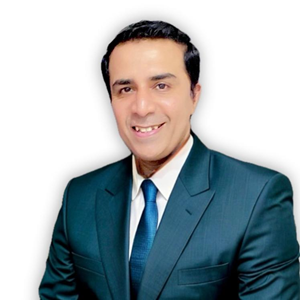
The author, Amit Malhotra, is Director of Sales, New Zealand Gateway
He can be contacted at +64 274054293