


Beyond Degrees: Why Modern Education Must Teach Wisdom Alongside Skills

Share

For generations, the standard blueprint for success in India has followed a linear path: secure high marks, earn a seat at a premier institute, and claim a degree that guarantees a corporate paycheck. This mechanical assembly line was constructed for an industrial era that valued rote compliance and predictable execution, a model that education reformers and policy thinkers now argue is no longer fit for purpose.
The world today is undergoing unprecedented civilizational fractures and shifts. A profound demographic imbalance is destabilizing global fertility rates: wealthy, developed nations face aging populations, while developing nations like India experience a massive youth bulge. Simultaneously, the accelerating growth of technologies such as artificial intelligence, synthetic biology, and robotics is ushering in a new paradigm of exponential change, one that confronts societies still largely operating with a linear mindset.
If the primary goal of education remains merely the transfer of information, observers note that it is a race machines have already won. Recognizing this, India’s National Education Policy (NEP) outlines a systemic shift away from rote exam culture toward holistic, multidisciplinary learning. To realize this vision, thinkers and institutions argue that Indian education must undergo a deeper paradigm shift: one that teaches wisdom alongside skills.
Moving from Dominion to Dharma
During the industrial era, modern mass schooling developed by filling minds with data and training individuals to execute tasks efficiently. But skills and information, as analysts point out, are fundamentally neutral; they are tools for execution, not frameworks for understanding life itself.
Historically, humanity has leveraged its technological leaps to assert dominion, a mindset characterized by power, control, and hyper-individualistic resource extraction. A technician operating strictly within this legacy model can optimize an AI system or engineer synthetic organisms, yet lacks the framework to foresee how those breakthroughs might exploit human psychology, threaten biosecurity, or disrupt global stability.
Educational reformers frame this contrast clearly:
Legacy Education focuses on skills to achieve Dominion — extraction and control. The Regeneration Paradigm focuses on wisdom to achieve Dharma — stewardship and balance.
True wisdom, in this analysis, requires shifting the educational paradigm toward Dharma, the ancient concept of righteous duty, cosmic order, and systemic harmony. This aligns directly with the NEP’s core emphasis on rooting education in the Indian ethos and human values. Dharma reframes the foundational question from “What am I legally entitled to extract or build?” to “What is my duty to the ecosystem and future generations?” When skills are taught without this moral grounding, the risk is the creation of clever technicians who lack a compass, individuals capable of great power but without the wisdom to wield it responsibly.
Cultivating the Journey: From Shoonya to Anant
To integrate these roots into modern educational reality, classrooms must fundamentally redefine the human journey. Education, reformers argue, should not be viewed as a pipeline into a corporate matrix. Instead, it must be framed as a conscious evolution from Shoonya, the zero-point of raw human potential, to Anant, the infinite horizon of collective consciousness and stewardship.
In practice, this reorientation calls for two foundational shifts:
Systemic Stewardship Students must be taught that businesses and technologies are not isolated profit engines, but living organs within a larger societal and planetary body. The ability to build must come paired with the responsibility to sustain.
Philosophical Inquiry Students must be encouraged to engage meaningfully with ethical dilemmas, history, and systemic risks. Knowing how to code an algorithm must be balanced with the capacity to analyze why and when it ought to be deployed.
Redefining Human Value
To truly move beyond degrees, educational institutions, parents, and policymakers must collectively redefine what “value” means. A student’s destiny, this school of thought holds, is not merely the sum of their test scores or their starting salary at a global firm. True value lies in the capacity to navigate chaos with emotional resilience, to lead with empathy, and to innovate with responsibility.
As India navigates its unique position in the global balance amid an AI and synthetic biology revolution, classrooms cannot afford to remain factories for compliance. By activating the visionary core of the NEP and consciously blending practical modern skills with the timeless anchoring of wisdom, India has the opportunity to nurture leaders who do not merely survive the new paradigm but actively guide humanity toward its highest potential.
The question is no longer whether education must change. The question is whether the change will come with the depth and intention the moment demands.
Views are personal
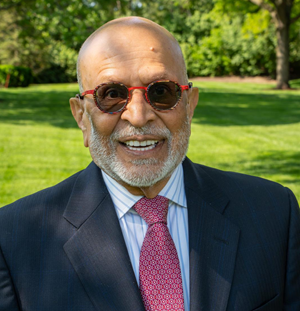
The author, Vivek Singhal, is Founder and CEO of Strategic Business Management Co. (Author of Dominion and Dharma)