

The Quiet Takeover: How AI Is Changing What Happens Inside Classroom

Share
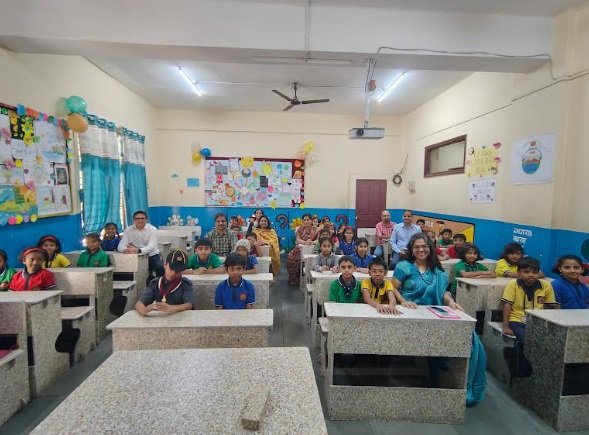
For most of the last century, a classroom looked more or less the same everywhere: a teacher at the front, a blackboard covered in chalk dust, rows of students copying down notes. That picture is starting to shift. Walk into a growing number of schools and colleges today, and you’ll find a new presence in the room — not a person, but a piece of software quietly doing work that used to belong entirely to teachers and textbooks.
Artificial intelligence has crept into education faster than most people expected. Students now turn to AI tools to untangle a concept they didn’t follow in class, or to get a first draft moving on an assignment they’re stuck on. For students who struggle with a subject, that kind of help can matter more than it sounds — it’s patient in a way a packed classroom often can’t be, and it’s there at 11 p.m. the night before a deadline, not just during the fifty minutes of a scheduled class. There’s no waiting for the next lesson, no putting a hand up and hoping to be noticed. Learning happens at whatever pace a student actually needs.
Teachers have found their own uses for it. Drafting assignments, putting together a bank of exam questions, sketching out a lesson plan — the kind of repetitive, time-consuming work that used to eat into evenings can now be done in a fraction of the time. That’s freed some teachers to spend more of their energy on the parts of the job that were never going to be automated: actually working through a confused student’s questions, one on one.
Not everyone is comfortable with how quickly this has happened, though. A number of educators worry that leaning on AI too heavily is quietly costing students something — the ability to sit with a hard problem and work it out themselves. If a student can get a finished essay or a solved equation in seconds, there’s a real question about whether they ever build the muscle for independent thinking in the first place.
Academic honesty has become just as thorny an issue. When an AI tool can produce a competent essay in the time it takes to make a cup of tea, telling original work apart from generated work is no longer straightforward, and schools are still figuring out how to handle it. Add to that the newer worries — how much of a student’s data these tools are collecting, and the fact that not every student has equal access to a laptop or a decent internet connection at home — and it’s clear the technology has arrived faster than the rules meant to govern it.
Even so, most people close to the classroom don’t see this as a story about AI replacing teachers. The more common view is that it’s a partnership — technology handling the parts of learning that can be automated, freeing teachers to focus on the parts that can’t.
“No technology can replace the emotional support, motivation, and values that teachers bring into the classroom,” one teacher said. “AI is a powerful tool which enhances learning, but it can never substitute the human connection, guidance, and encouragement that a teacher provides.”
Students, for their part, seem to agree that the technology is useful without mistaking it for a substitute for their teachers. “AI saves time by helping us understand concepts and complete tasks quickly,” one student said. “But we still depend on our teachers to clear doubts, inspire us, and guide us toward becoming better learners and individuals.”
That, in the end, seems to be where the debate is settling — not whether AI belongs in classrooms, since it’s already there, but how to make sure it stays a tool teachers and students use, rather than one that starts using them.