
“Education Was Meant To Shape Human Beings, Not Just Produce Students”

Share
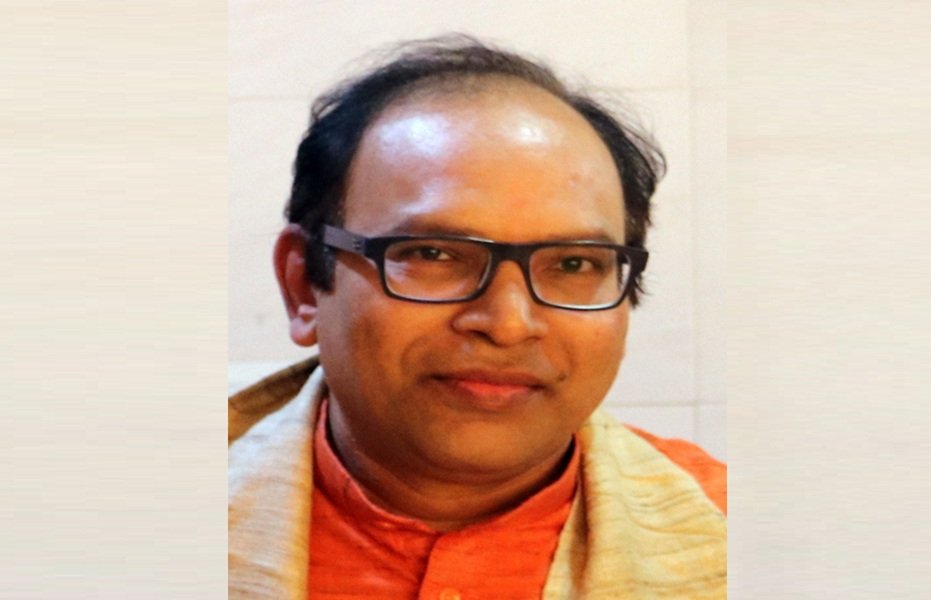
In an interview with EduKida, Suman Kumar, Deputy Director at the Sangeet Natak Academy, reflects on how education in India has drifted away from the guru-shishya tradition and why performing arts need to return to the heart of learning
Q: Explain the link between performing arts and education in India. How do you see this relationship today?
I want to talk about how education in India has changed over time. Earlier, all knowledge systems started with the guru-shishya tradition. That is how learning happened everywhere. Not only in India. Slowly, as society became modern and structured, this relationship changed. Guru became a teacher. Shishya became a student. Education became systematic. Curriculum started getting decided somewhere else. Students started following fixed paths.
Earlier education was not only about the nation or producing citizens. It was about turning a person into a complete human being. Someone useful not only for the country but for the whole universe. In the gurukul system, when a child went to a guru, the guru took full responsibility. What the child eats. How the child sleeps. How the child sits, walks, and speaks. What values does the child carry? Everything.
Q: How is that different from what schools do today?
Today, schools only take responsibility for what a child reads and writes. Nothing beyond that. If a child misbehaves, schools quickly say it is because of parents or the home environment. They do not take responsibility for habits, values, or behaviour. Earlier, education separated the child from society and placed them in a neutral and natural space. That neutrality is gone now.
Q: You often say education today is not neutral. What do you mean by that?
Education today has colours. Every school has its own colour. Its own ideology. Anyone can run a school. The person running a school may be doing any kind of business outside. You may never trust that person with your child otherwise. But once it is covered under the name of the school, we accept it.
Many schools have become money-making systems. Most institutions start with the word service. But slowly, service becomes about how much benefit is coming back. Children who bring money or donations are treated differently. This happens openly.
Q: Where do government schools stand in this picture?
Government schools operate inside a system that people believe is corrupt. This belief has grown over time. After independence, we wanted to become Indian again. But very quickly, within ten or twenty years, that feeling faded. We again started following colonial systems. The British education system was corrupt by design. It was made for exploitation. It needed corruption to survive.
They did not start education for us. They needed clerks. People who could manage accounts. People who could control systems. That structure stayed.
Q: At what point did we realise something was missing?
Very late. After many years, we started feeling something was lacking. We felt disconnected from our roots. We started asking what is ours in this education system. We talk about becoming Vishwaguru. But guru means having the best knowledge system. The best way of living life. The best way of understanding relationships between humans and nature. We gave the world many things. Zero. Knowledge. Ideas. But being a guru is not about talking. It is about practice.
Where do arts fit into this whole journey of education?
Humans are artists first. Children copy. Then they imagine. Imagination is powerful. But pure imagination can also be dangerous. It has no boundaries. That is why it needs guidance. Earlier education understood this.
Discipline was also a part of education. But discipline was misused. Teachers often came from powerful social groups. Equality made them uncomfortable. Even though the Constitution says everyone is equal, education did not fully follow it.
Has society also changed its role in education?
Yes. Earlier societies participated. Villages corrected children together. Today, society avoids involvement. We ignore instead of participating. That mindset entered education, too. Some leaders tried honestly after independence. But later generations lost commitment. Even today, policies talk about the arts, but implementation is weak.
The new education policy talks a lot about vocational learning and arts. Do you think it is working?
The words are there. But systems are not ready. Performing arts are placed at the centre, but schools do not understand what performance really means.
Performance is everywhere. In offices. In daily work. But performance without art is empty. Art gives depth. Without art, performance becomes mechanical.
What exactly went wrong inside schools when it comes to arts?
Teachers were not trained. Literature teachers started a theatre. Language teachers handled plays. Music teachers prepared shows. Arts became activities, not learning. Parents and teachers both became afraid of activities. From childhood, we are told that studying makes you successful. Playing makes you useless. This thinking is deeply planted. So gaps started forming. Professional institutes like NSD and art colleges produced strong artists. But schools stayed disconnected.
Has there been any serious effort to change this through the curriculum?
Yes. NCERT worked hard. Practitioners were involved. The syllabus was revised many times. Art modules were created. But the problem is implementation.
Curriculum exists. People do not. Teachers are not prepared.
How is art usually treated in schools today?
Mostly as decoration. Craft teachers are called art teachers. Cutting paper. Making charts. One annual function. That is not art education. That is decoration.
Schools decorate themselves using performance. Parents feel happy seeing their child on stage. But learning does not happen.
What role should academies and institutions play here?
Academies should lead. But even they were not fully involved. Some programmes started and then stopped. Commitment was missing.
We do not even have an Indian Cultural Service like the IAS. Culture needs labs. Regional cultural labs. Without them, regional culture fades. Big cities define culture. Others copy.
When should arts really enter education, according to you?
Very early. Not after class 12. By then body and mind are already shaped. Breaking habits takes years. Many never break. Art does not happen to everyone. It needs a moment. A spark. You cannot plan it. But you can create chances. Children are the biggest artists. They understand abstract ideas naturally. Water. Dreams. Shapes. Imagination. They are not corrupted yet. Instead of nurturing that, we push them into notebooks. Fixed pages. Fixed frames. That is where the damage starts.
edukida.editorial@gmail.com